Monthly Archives: July 2024

The social pressures of a public dog

There is a lot of peer pressure involved in having a dog.

If you are out walking your dog and someone says, “may I pet your dog?” and you reply “no,” you are often met with a version of “oh, is he mean?” We immediately shame the dog and often make the owner feel bad. When I work with clients who have a dog that has snapped at someone in public, I ask why the person was so close to the dog. Often the owner tells me how hard they tried to keep the person away but were unsuccessful or they were pressured into allowing contact.

Dogs that go out in public are asked to tolerate other dogs that might rush up and sniff them, complete strangers who want to crowd their space and pet them, and they are supposed to remain calm with the chaos around them.

There are dogs who are great in public and are social butterflies who appear to have no issues with what life throws their way. These dogs often make other pet owners feel bad, especially those who have a dog that isn’t so happy in public. We may think, “Why can’t my dog behave like that?”

After hanging out for five days at a dog friendly beach on Lake Michigan, I decided more of our dogs could be happy in public if the public would just leave the dogs alone.
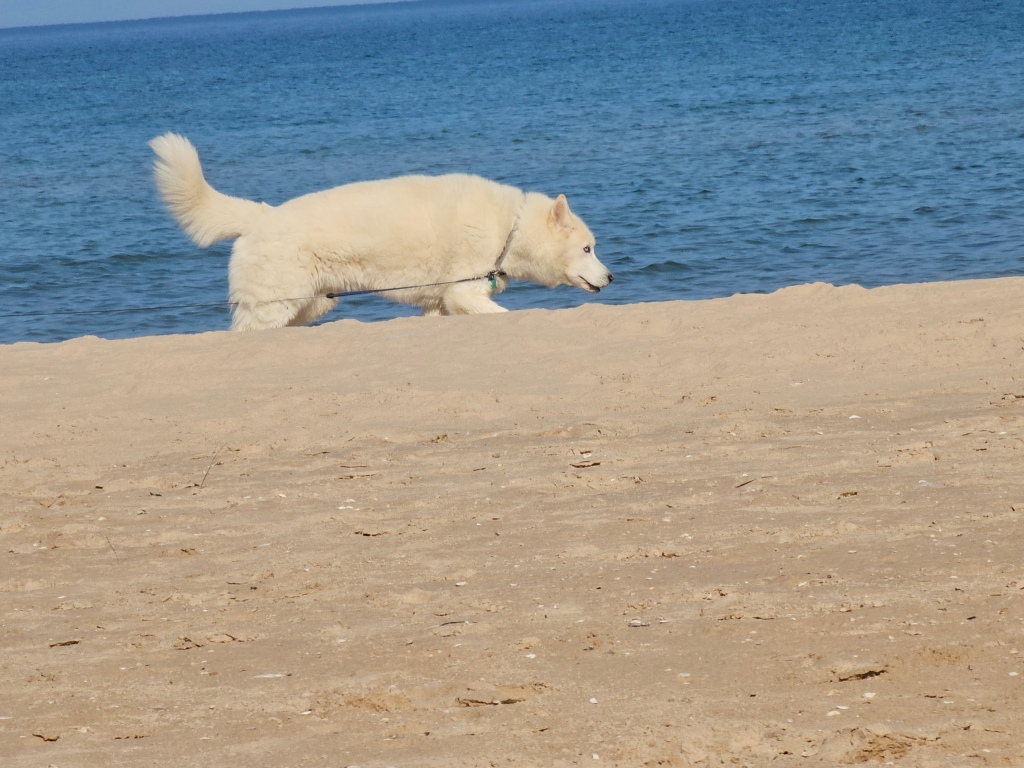
This dog was enjoying the beach while on a long lead. Other people with off leash dogs did a great job of keeping their dogs away from this one.

As I walked the beach in the early morning, I would often see dogs off leash running in and out of the water and doing zoomies on the sand. Some of them would come up and sniff me, but most of them ignored me. I ignored them in return. If a dog did come up to me, I stopped, turned slightly sideways to the dog and was silent. I did not look at the dog directly. I kept my hands at my side. If the dog stayed with me and bumped my hand or in some way appeared to want to engage me, I would open my hand and let the dog come in for petting. Generally, the dogs just sniffed me, then dashed away again. Of the 50 or so dogs I saw, I only petted two.
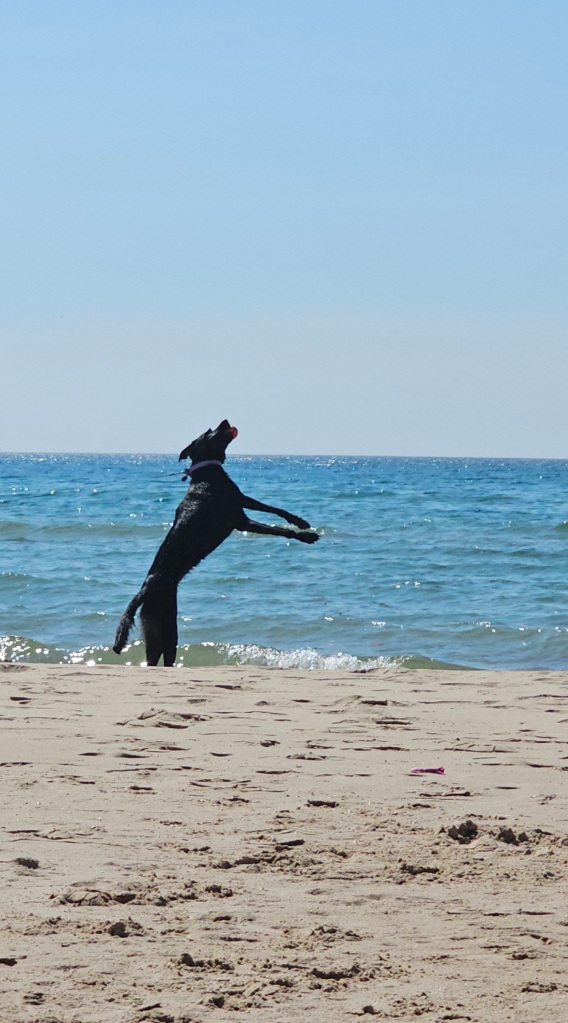
This dog was having a blast on the beach playing ball.

Unfortunately, I saw many people actively trying to get dogs to come to them, or people bending over to pet the dogs that came up to them for a sniff and then the dogs ducking down and dancing away.

Like many people, I felt conflicted. I wished I had my dogs on the beach as I know all three of them would have loved the waves and the sand. But I also know my dogs would not have enjoyed people trying to pet them, or other dogs rushing into their spaces. My dogs are happy to ignore other people and dogs, but they do not enjoy close personal contact with strangers.
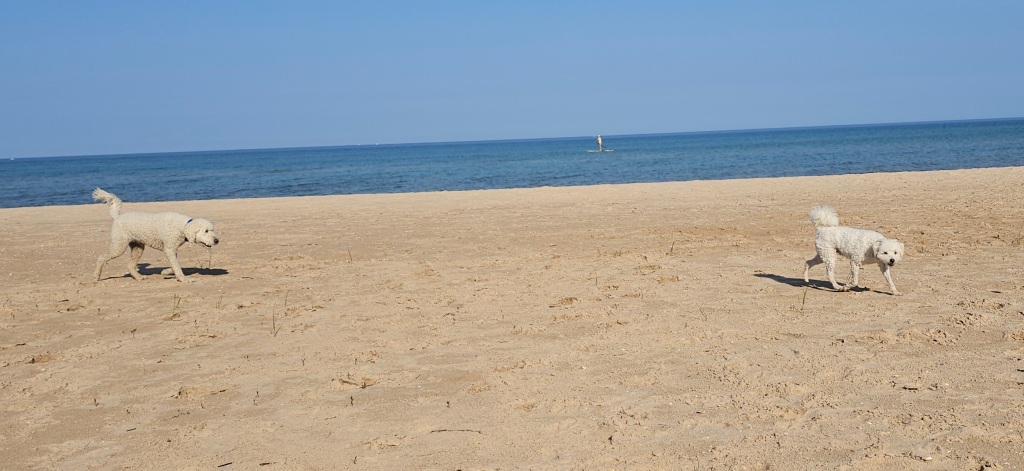
These dogs ignored everyone and were very attentive to their person.

So, I don’t take my dogs to places like this and I feel confident that if my dogs could speak English, they would thank me for not putting them into situations where they might feel the need to defend themselves.

There are many dogs who are happier just staying home and while we might wish for our furry friends when we are out and about; it is ok if they aren’t there.

It is important to know your dog. Will he or she be happy in a public place with people who may be rude in terms of canine communication? And if you do take your dog out in public and especially if you are in a place where the dogs are off leash; be sure you have a good recall. Even if your dog is friendly, not everyone wants to meet your dog.

In one case, I was sitting on a beach chair and a dog came running toward me. The owner called to the dog, the dog looked back at the owner, looked at me and came over anyway. The reward of visiting a new person was greater than the reward of going back to the owner. The dog was super friendly and as soon as she sniffed me, she dashed back to her owner. I didn’t mind and found the dog delightful, but there are people who might have been terrified of seeing a large dog dash up to them. In another case a border collie saw me out walking and ran a big arc to get behind me. He kept right in my tracks and put his nose on my leg a few times. He was trying to herd me somewhere. Again, the dog was friendly, but I am sure the herding behavior could have worried a non-dog person. I stopped walking and the dog immediately went back to his owner.

So, do your part to help social dogs remain social in public settings. Just ignore them unless they tell you directly, they want to engage. Remember not all owners know what their dog is saying, so don’t ask the owner if you can pet the dog. Ask the dog. And if someone asks you to not engage with their dog, THANK them for letting you know and give them kudos for knowing their dog vs shaming them into letting you interact with the dog. If your dog doesn’t enjoy the chaos of places such as public parks, farmer’s markets, etc.; then don’t take it. Instead find enriching spots where your dog can have fun.

This post is not meant to debate the off-leash dog aspects of this beach. It was a private beach and it appeared to be accepted behavior for the residents to let their dogs off leash.

Stop! I did not say you could pet me

Imagine you are walking down the street, just taking in the sights, sounds and smells when suddenly a stranger rushes up and starts shouting, “OMG, I love your hair, that is so soft looking, I must feel it.” And you realize in that moment that you are trapped in a corner and have nowhere to go; plus, it turns out the person approaching you is speaking a foreign language you don’t understand. You have no idea they are talking about your hair. You just see a person rushing at you with their hands out going toward your head.

Really use your imagination and ask yourself what emotions you would be feeling. How about if the stranger was doing that to your child instead of you?

My guess is you would feel panicked, possibly afraid. Will you laugh it off, tolerate the stranger touching you or will you defend yourself with whatever you have available?

Most of us would never tolerate this behavior. And yet we allow it to happen to our dogs daily when we take them out in public and allow people to pet them. Or when we invite visitors into our home and allow the visitors to interact with the dog.

I get emails weekly from people whose dog has growled or snapped at either a visitor to the person’s home or someone reaching to pet the dog on a walk. In most cases the dog was minding its own business when the person approached it and reached out to touch it.

Dogs on a walk are on a leash; they can’t run away if they are worried. Dogs in a home may feel trapped as well.

Why do you think it is OK for people to touch your dog without the dog’s permission? Often, we don’t want to appear rude by telling someone not to touch our dog. We don’t want strangers to think our dog is “aggressive.” And people often do shame the owner by saying, “what’s wrong, does he bite?” if we try and ask that the dog be given space. Or you get the overbearing, “but all dogs love me” person who insists on doing whatever they want.

Most of the time we just don’t know the dog is unhappy until the dog growls, snaps, or bites. Then we blame the dog for being “bad.” Yet, if someone were behaving inappropriately to you or your child and you defended yourself by hitting the person; you would most likely be congratulated for defending yourself. No one would call you “bad” or “aggressive.”

Sadly, many pet owners don’t know their dog is speaking until the dog does growl. But dogs are communicating with their environment constantly.

While we are always telling children “ask permission to pet the dog” we should also ALWAYS be asking the dog what he thinks about being petted.

First, think about your dog. How do you know he wants to be petted? Does he bump your hand, does he paw your leg, rub up against you, give you liquid eyes that implore you to touch him? Believe me, he is doing something that says, “please interact with me.” If your dog is not doing that same thing to the person attempting to pet the dog, then the dog may be saying “not right now.”

If you are on a walk and your dog is on a leash; does the dog back away from the person attempting to pet it? The dog is saying “no.” Does the dog turn its head away or duck its head down when the person reaches in? The dog is saying “no.”  

This dog came up to me. I did not ask it to come to me, she came in loose and wiggly and had plenty of room to get away from me if she decided to. She was clearly communicating, “please interact with me”

And please remember that a dog wagging its tail does not always mean the dog is happy. Many tail wags are asking for social distance. So many people call and say, “he was wagging his tail and then he bit.”

If you have company and a person is sitting on your couch and the dog comes up to sniff the person, that is NOT an invitation for being petted. That is just the dog’s way of gathering more information. Does the dog sniff the person and then walk away? If so, the dog is saying “ok, sit on the couch, I’m going to ignore you for now.”

If the dog is moving away from the person and the person then decides to follow the dog, please step in, and help your dog. This is often when children are bitten as they see the dog leaving and follow it. The dog was probably trying to be polite and get out of a stressful situation. From the dog’s perspective he was clearly communicating. So, what is the dog to think if someone totally ignores that communication? The dog may feel he is being threatened.

Ask yourself if your dog must be friendly to everyone he meets? Would it be ok if he ignored them instead? If your dog must be friends with everyone, then work hard to associate strangers with fun and food and enlist the help of a reward-based trainer if the dog is stressed.

There are always going to be exceptions. There are dogs that appear to solicit attention and then suddenly growl or snap. Dogs can be conflicted. They may want attention, then once it starts happening decide it is too much. These are often dogs who have been stressed over and over by previous encounters with strangers. Please immediately contact a reward-based trainer if this describes your dog.

And when I say stranger, I don’t always mean a person the dog has never met. Dogs can have conflict with your neighbor or a relative, even if the dog has met that person in the past. Maybe the dog just isn’t feeling the love that day, he still gets to say “no” if the neighbor wants to pet him.

Remember, your dog is always communicating. We need to do a better job of listening to what the dog is saying.

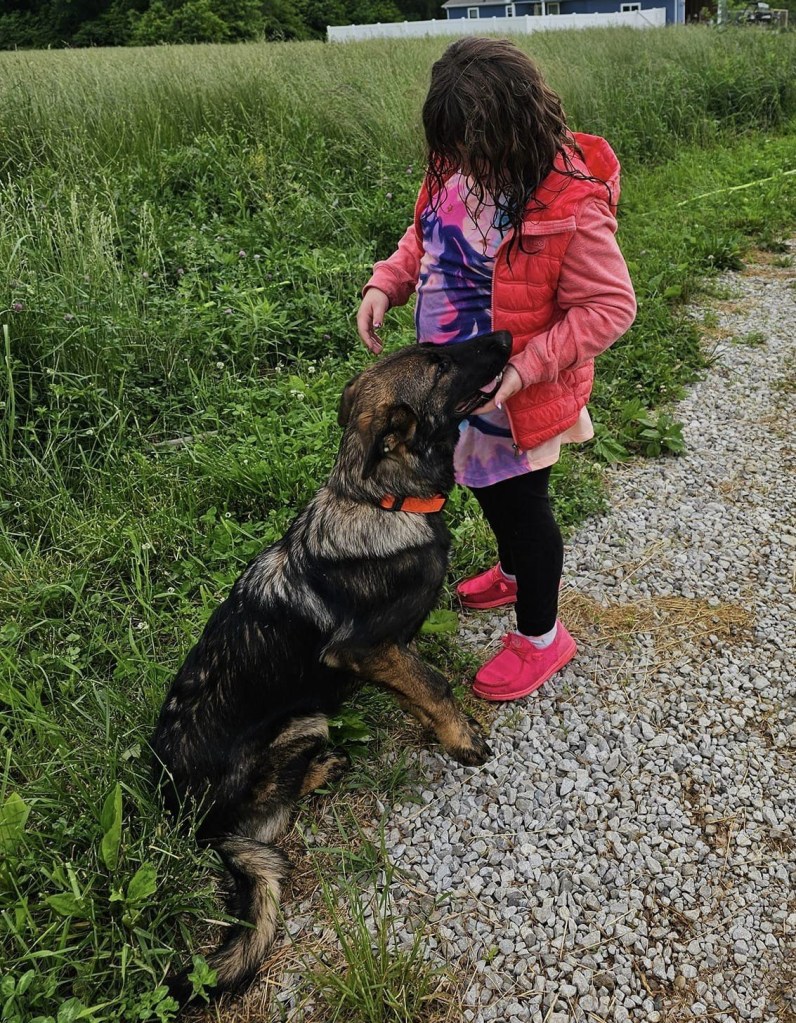
This dog has plenty of opportunities to run away if he gets too stressed by this encounter. He has a paw slightly lifted and his ears are down, possible indicators he is not 100 percent sure about this encounter, but when the child stepped away from him a few seconds later, he followed her and asked for more attention.