Author Archives: connieswaim

Unknown's avatar

About connieswaim

Dog trainer, writer, reader, lover of fine wine

Have a plan for your dog to help it through the holidays

The holidays are fast upon us, which often means traveling, having people visit, and generally a disruption in normal routines. Many people become stressed during the holidays due to all the changes and the expectations. Our dogs often become stressed as well.

Dogs love a good routine, and they don’t understand why 20 of your distant relatives all showed up at the same time or why your nerves are frazzled trying to spruce up the house for the arriving guests.

Always ask yourself if your dogs enjoy the holidays as much as you do, or would they rather just stay home in a quiet room?

While you might not be able to control how you feel about Great-Aunt Gertrude’s 2000th telling of your disastrous first date or stop your brother from turning on whatever football game there is instead of engaging in family conversation; we can help our pets cope more easily with the holidays.

Because we love our dog, we often want to show it off and let people see how wonderful that dog is. However, not all dogs are that excited about meeting all our friends and relatives.

Unlike you, your dog does not have to be in the middle of that family gathering. If your dog is not a social butterfly find him a quite place in the house to relax. One with a door that shuts and is away from most of the activity is even better. If your dog is truly stressed by visitors consider if he would be happier if you boarded him at his favorite boarding facility.

If you are hosting the family gathering, ask your family not to bring their pets, unless you know your dog already had a great relationship with those pets. Numerous dog fights happen each year when extended family members get together and everyone wants to bring their dog. Think of all the high value food that is around which can cause dog/dog conflict, not to mention the crowds of people and inadequate space for dogs to properly meet.

If your family member cannot leave their pet behind, have a game plan for where that pet will be and how it will be introduced to your pet in a relaxed manner. Make sure the visiting pet will have a quite space to be away from the action if needed.

For those of you traveling, ask yourself if your dog really needs to go with you. We often feel bad boarding our dogs, but if you have chosen the right boarding facility, chances are good your dog may be less stressed there. If your dog must go with you; again, have a plan for where that dog will be staying once it gets there and how it will meet any other dogs and family members.

One of the reasons I crate train my dogs is so when I travel, they will not be stressed if I ask them to go into their crate and hang out, even in a strange home. You do not want to put your dog in a crate for the first time when you are already doing something stressful such as traveling or having company.

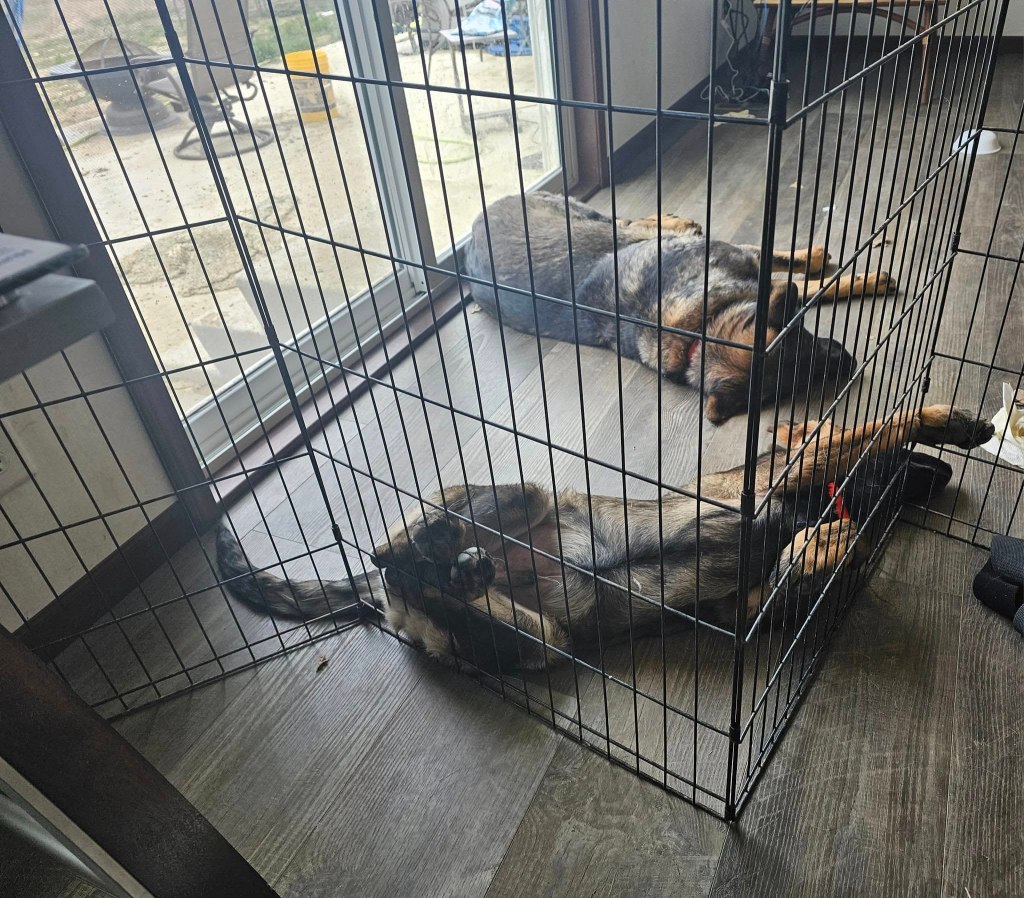
Crates and X-pens are a great way to help dogs relax and keep everyone safe and happy during the holidays. This puppy is very relaxed as all the action that could be stressful is on the other side of this X-pen

Most of the calls I get after the holidays involve a dog biting a child or biting some other family member’s dog. Even if your dog has been great with adults that doesn’t mean he will be a fan of small children and while he may like the occasional doggy friend, it doesn’t mean he will be friends with all dogs he meets.

I just got a call from a devastated pet owner whose beloved dog bit a visiting 3-year-old child. When I asked what was going on before the bite; I was told no one saw anything because both the dog and the 3-year-old were under the table while everyone was sitting down to a meal. Never, ever leave your dog alone with a child. A good rule of thumb is this: however old the child is, you should be within that many feet of the dog/child. Example: if the child is 1 years old, an adult should always be within one foot of that dog and child. If the child is 4 years old an adult should always be within 4 feet. That means ALWAYS. It means you can’t go answer the door and leave the dog and child in another room or be pre-occupied getting dinner. Many dog bites to children happen when no one is in the room with the child and dog.

Interactions between dogs and children they do not know can sometimes lead to unfortunate encounters. Always teach children to be respectful of dogs they meet and never leave a child unattended with a dog.

Ask your guests of all ages to be respectful of your dog and her personal space. No one should ever go up to your dog and pet it. NO ONE. Your dog should get to choose whether she wants to engage with visitors. Think about what your dog looks like when she wants you to pet her. What does she do? Does she paw your leg? Bump your hand? She is letting you know she is ready for an interaction. If your dog does not use the same signals to visitors, they should ignore her. Your dog’s job is not to be petted by everyone in your home. Your dog’s job is to not bite anyone, and your job is to ensure you do not set your dog up for failure.  

Especially when children are present, keep a close eye on your dog’s body language. Is your dog constantly moving away from a 5-year-old intent on petting it? If so, that dog is politely asking for the child to stop interacting. Is the dog turning its head away when approached, licking its lips or yawning? You might consider putting the dog in a quiet room away from the action or ensure the child is old enough to understand the dog is asking for some space.

Resources are another hot-button issue when dogs are involved in the holidays. A resource is something a dog may want and which it might be unwilling to share. Think of a piece of ham dropped from the 4-year old’s plate or maybe your dog doesn’t enjoy people (or other dogs) coming near you or its favorite sleeping spot.

These resources often cause a lot of conflict between dogs and between dogs and people they don’t know well. When people are eating it is a great time to give your dog a quiet break away from the action. Encourage people not to share food with the dog, especially if there are multiple dogs in the home.

To simplify everything; just ask yourself how your dog feels about visitors. If she is a social butterfly then let her mix and mingle, but still watch for signs of stress or anxiety and give her a break if needed. If you know your dog is worried about visitors then don’t even attempt to change how she feels during the holidays, instead work with a professional trainer who has behavior modification experience and maybe your dog will be up for the holidays next year.

The social pressures of a public dog

There is a lot of peer pressure involved in having a dog.

If you are out walking your dog and someone says, “may I pet your dog?” and you reply “no,” you are often met with a version of “oh, is he mean?” We immediately shame the dog and often make the owner feel bad. When I work with clients who have a dog that has snapped at someone in public, I ask why the person was so close to the dog. Often the owner tells me how hard they tried to keep the person away but were unsuccessful or they were pressured into allowing contact.

Dogs that go out in public are asked to tolerate other dogs that might rush up and sniff them, complete strangers who want to crowd their space and pet them, and they are supposed to remain calm with the chaos around them.

There are dogs who are great in public and are social butterflies who appear to have no issues with what life throws their way. These dogs often make other pet owners feel bad, especially those who have a dog that isn’t so happy in public. We may think, “Why can’t my dog behave like that?”

After hanging out for five days at a dog friendly beach on Lake Michigan, I decided more of our dogs could be happy in public if the public would just leave the dogs alone.

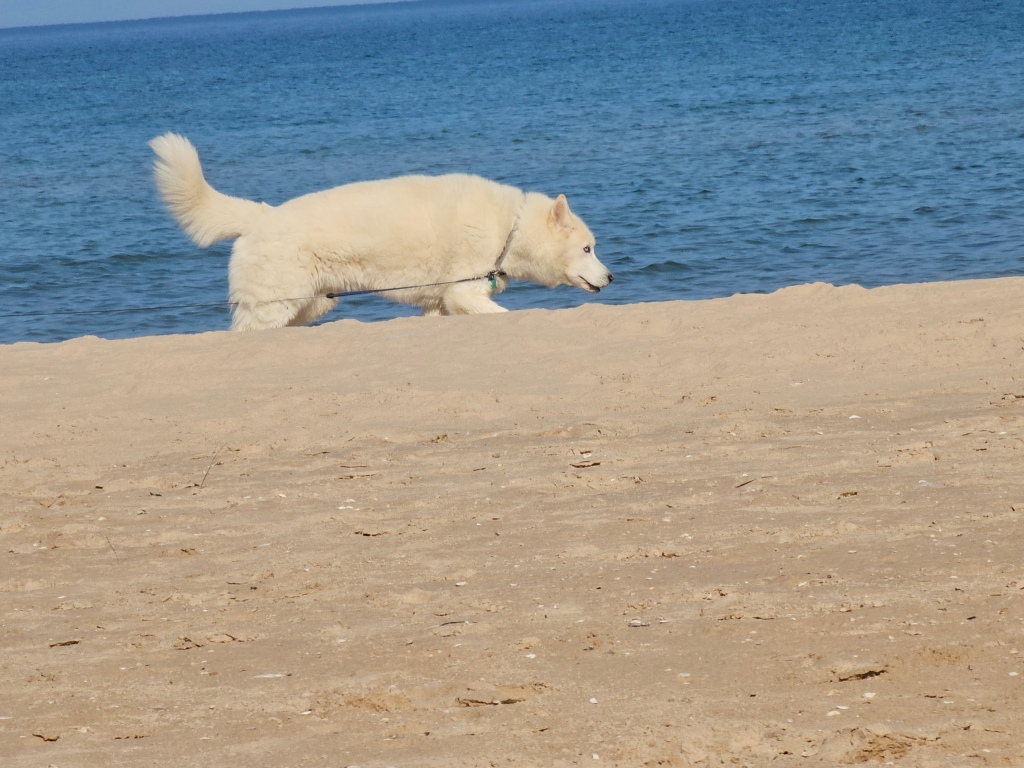
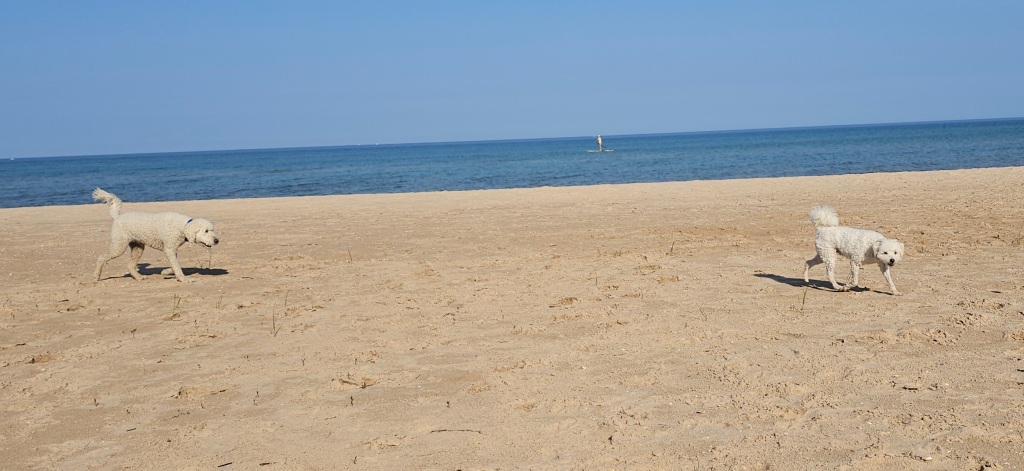
This dog was enjoying the beach while on a long lead. Other people with off leash dogs did a great job of keeping their dogs away from this one.

As I walked the beach in the early morning, I would often see dogs off leash running in and out of the water and doing zoomies on the sand. Some of them would come up and sniff me, but most of them ignored me. I ignored them in return. If a dog did come up to me, I stopped, turned slightly sideways to the dog and was silent. I did not look at the dog directly. I kept my hands at my side. If the dog stayed with me and bumped my hand or in some way appeared to want to engage me, I would open my hand and let the dog come in for petting. Generally, the dogs just sniffed me, then dashed away again. Of the 50 or so dogs I saw, I only petted two.

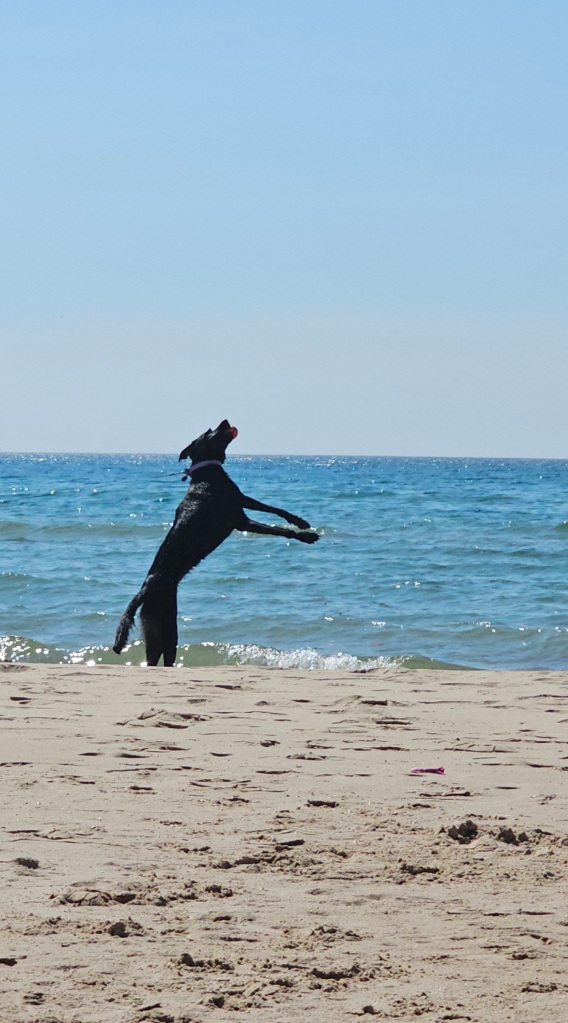
This dog was having a blast on the beach playing ball.

Unfortunately, I saw many people actively trying to get dogs to come to them, or people bending over to pet the dogs that came up to them for a sniff and then the dogs ducking down and dancing away.

Like many people, I felt conflicted. I wished I had my dogs on the beach as I know all three of them would have loved the waves and the sand. But I also know my dogs would not have enjoyed people trying to pet them, or other dogs rushing into their spaces. My dogs are happy to ignore other people and dogs, but they do not enjoy close personal contact with strangers.

These dogs ignored everyone and were very attentive to their person.

So, I don’t take my dogs to places like this and I feel confident that if my dogs could speak English, they would thank me for not putting them into situations where they might feel the need to defend themselves.

There are many dogs who are happier just staying home and while we might wish for our furry friends when we are out and about; it is ok if they aren’t there.

It is important to know your dog. Will he or she be happy in a public place with people who may be rude in terms of canine communication? And if you do take your dog out in public and especially if you are in a place where the dogs are off leash; be sure you have a good recall. Even if your dog is friendly, not everyone wants to meet your dog.

In one case, I was sitting on a beach chair and a dog came running toward me. The owner called to the dog, the dog looked back at the owner, looked at me and came over anyway. The reward of visiting a new person was greater than the reward of going back to the owner. The dog was super friendly and as soon as she sniffed me, she dashed back to her owner. I didn’t mind and found the dog delightful, but there are people who might have been terrified of seeing a large dog dash up to them. In another case a border collie saw me out walking and ran a big arc to get behind me. He kept right in my tracks and put his nose on my leg a few times. He was trying to herd me somewhere. Again, the dog was friendly, but I am sure the herding behavior could have worried a non-dog person. I stopped walking and the dog immediately went back to his owner.

So, do your part to help social dogs remain social in public settings. Just ignore them unless they tell you directly, they want to engage. Remember not all owners know what their dog is saying, so don’t ask the owner if you can pet the dog. Ask the dog. And if someone asks you to not engage with their dog, THANK them for letting you know and give them kudos for knowing their dog vs shaming them into letting you interact with the dog. If your dog doesn’t enjoy the chaos of places such as public parks, farmer’s markets, etc.; then don’t take it. Instead find enriching spots where your dog can have fun.

This post is not meant to debate the off-leash dog aspects of this beach. It was a private beach and it appeared to be accepted behavior for the residents to let their dogs off leash.

Stop! I did not say you could pet me

Imagine you are walking down the street, just taking in the sights, sounds and smells when suddenly a stranger rushes up and starts shouting, “OMG, I love your hair, that is so soft looking, I must feel it.” And you realize in that moment that you are trapped in a corner and have nowhere to go; plus, it turns out the person approaching you is speaking a foreign language you don’t understand. You have no idea they are talking about your hair. You just see a person rushing at you with their hands out going toward your head.

Really use your imagination and ask yourself what emotions you would be feeling. How about if the stranger was doing that to your child instead of you?

My guess is you would feel panicked, possibly afraid. Will you laugh it off, tolerate the stranger touching you or will you defend yourself with whatever you have available?

Most of us would never tolerate this behavior. And yet we allow it to happen to our dogs daily when we take them out in public and allow people to pet them. Or when we invite visitors into our home and allow the visitors to interact with the dog.

I get emails weekly from people whose dog has growled or snapped at either a visitor to the person’s home or someone reaching to pet the dog on a walk. In most cases the dog was minding its own business when the person approached it and reached out to touch it.

Dogs on a walk are on a leash; they can’t run away if they are worried. Dogs in a home may feel trapped as well.

Why do you think it is OK for people to touch your dog without the dog’s permission? Often, we don’t want to appear rude by telling someone not to touch our dog. We don’t want strangers to think our dog is “aggressive.” And people often do shame the owner by saying, “what’s wrong, does he bite?” if we try and ask that the dog be given space. Or you get the overbearing, “but all dogs love me” person who insists on doing whatever they want.

Most of the time we just don’t know the dog is unhappy until the dog growls, snaps, or bites. Then we blame the dog for being “bad.” Yet, if someone were behaving inappropriately to you or your child and you defended yourself by hitting the person; you would most likely be congratulated for defending yourself. No one would call you “bad” or “aggressive.”

Sadly, many pet owners don’t know their dog is speaking until the dog does growl. But dogs are communicating with their environment constantly.

While we are always telling children “ask permission to pet the dog” we should also ALWAYS be asking the dog what he thinks about being petted.

First, think about your dog. How do you know he wants to be petted? Does he bump your hand, does he paw your leg, rub up against you, give you liquid eyes that implore you to touch him? Believe me, he is doing something that says, “please interact with me.” If your dog is not doing that same thing to the person attempting to pet the dog, then the dog may be saying “not right now.”

If you are on a walk and your dog is on a leash; does the dog back away from the person attempting to pet it? The dog is saying “no.” Does the dog turn its head away or duck its head down when the person reaches in? The dog is saying “no.”  

This dog came up to me. I did not ask it to come to me, she came in loose and wiggly and had plenty of room to get away from me if she decided to. She was clearly communicating, “please interact with me”

And please remember that a dog wagging its tail does not always mean the dog is happy. Many tail wags are asking for social distance. So many people call and say, “he was wagging his tail and then he bit.”

If you have company and a person is sitting on your couch and the dog comes up to sniff the person, that is NOT an invitation for being petted. That is just the dog’s way of gathering more information. Does the dog sniff the person and then walk away? If so, the dog is saying “ok, sit on the couch, I’m going to ignore you for now.”

If the dog is moving away from the person and the person then decides to follow the dog, please step in, and help your dog. This is often when children are bitten as they see the dog leaving and follow it. The dog was probably trying to be polite and get out of a stressful situation. From the dog’s perspective he was clearly communicating. So, what is the dog to think if someone totally ignores that communication? The dog may feel he is being threatened.

Ask yourself if your dog must be friendly to everyone he meets? Would it be ok if he ignored them instead? If your dog must be friends with everyone, then work hard to associate strangers with fun and food and enlist the help of a reward-based trainer if the dog is stressed.

There are always going to be exceptions. There are dogs that appear to solicit attention and then suddenly growl or snap. Dogs can be conflicted. They may want attention, then once it starts happening decide it is too much. These are often dogs who have been stressed over and over by previous encounters with strangers. Please immediately contact a reward-based trainer if this describes your dog.

And when I say stranger, I don’t always mean a person the dog has never met. Dogs can have conflict with your neighbor or a relative, even if the dog has met that person in the past. Maybe the dog just isn’t feeling the love that day, he still gets to say “no” if the neighbor wants to pet him.

Remember, your dog is always communicating. We need to do a better job of listening to what the dog is saying.

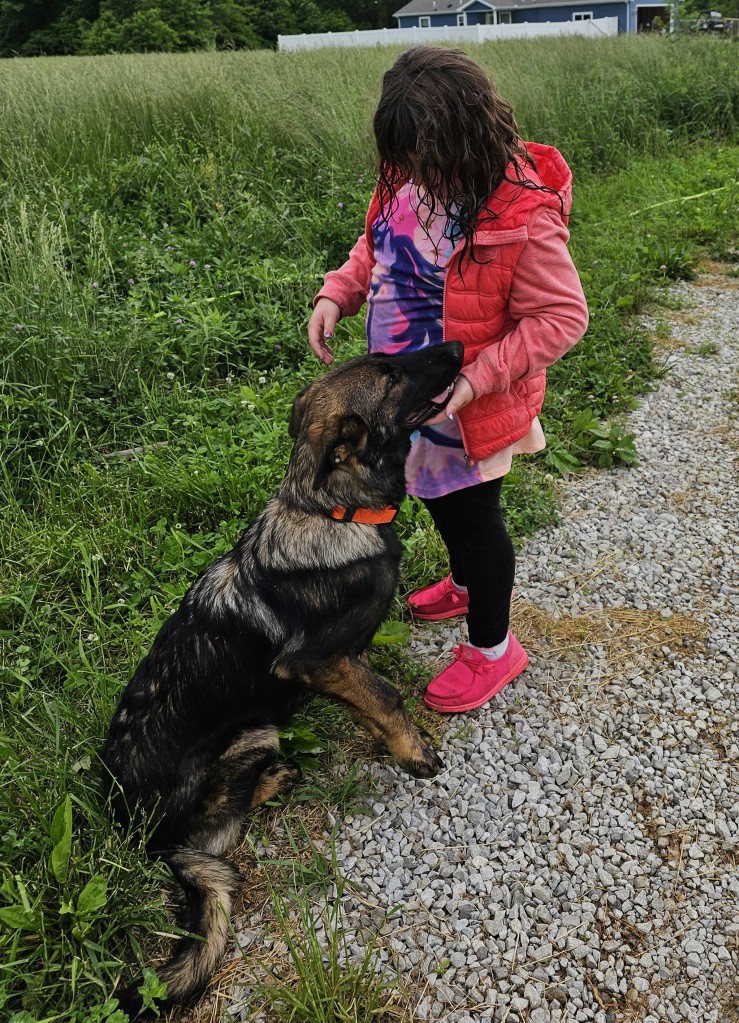
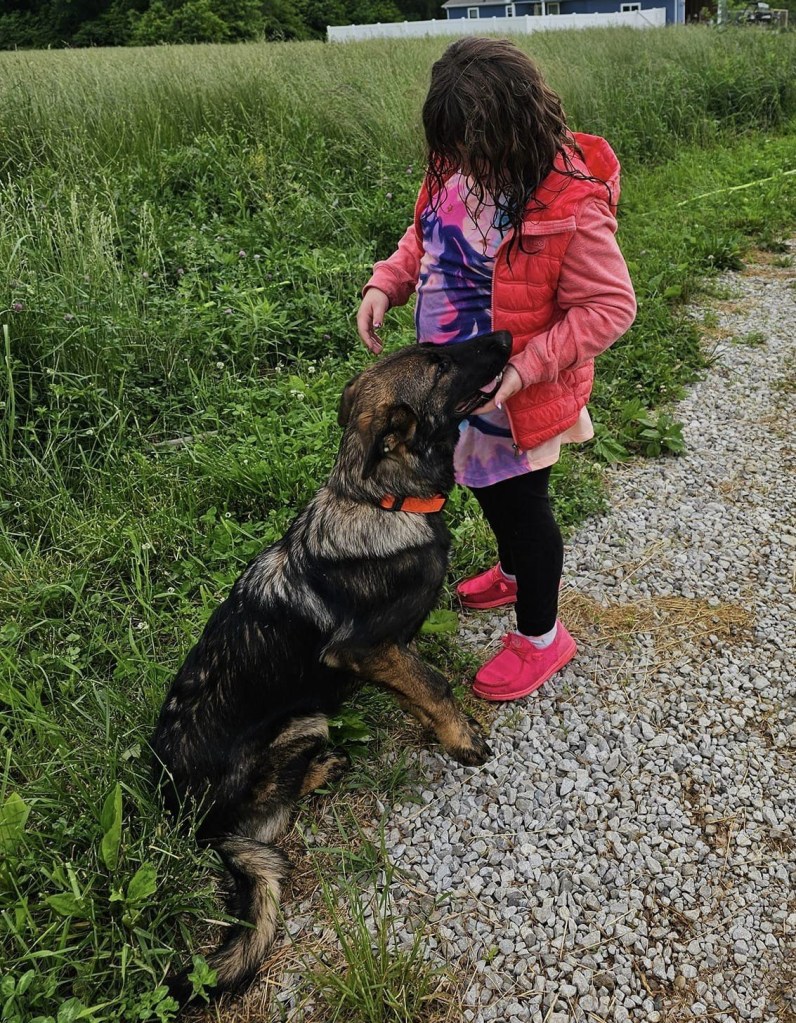
This dog has plenty of opportunities to run away if he gets too stressed by this encounter. He has a paw slightly lifted and his ears are down, possible indicators he is not 100 percent sure about this encounter, but when the child stepped away from him a few seconds later, he followed her and asked for more attention.

Please don’t make me do the scary thing

I am afraid of storm drains. You know the kind at the edge of the street where storm water runs into the dark. One day you decide to help me get over my fear of storm drains; and you ask me to come talk to you near a drain and as I approach you give me a $100 bill. The minute I take the $100 bill Pennywise the Clown from Stephen King’s IT pops out and terrifies me. I run away, so you decide to put down a big line of $100 bills from the middle of the street to the drain and I slowly creep forward picking up the $100 bills but right when I get the drain; there is Pennywise the Clown AGAIN.

You talk to me and tell me it is just an imaginary clown, absolutely NOTHING to be afraid of and show me an entire handful of $100 bills and tell me they are all mine if I walk close to you. So, I do and then as soon as I get the money Pennywise whispers “they all float down here.” I refuse to go near the drain again.

The next day you and I go for a walk around the neighborhood and a $100 bill floats across the street and I freak out, scream, punch you and run away.

What the hell just happened? The $100 bill predicted I would be scared beyond what I could handle so I reacted by hurting you and running away. $100 bills are now poisonous to me. They predict something scary will happen.

How many times have you done this to your dog? Showed the dog something yummy and then said, “all you have to do to get this yummy thing is do something that you don’t enjoy?” We think we are teaching the dog overcoming its fear will give it something tasty. Instead, we may be teaching the dog we are not to be trusted and good things to eat means something bad is about to happen.

Let me give you two examples from recent clients.

Moose is a 4-year-old tiny terrier. He is afraid of the world. Because he is so small, his owners often stoop down and try and pick him up. Moose now bites people because they scare him including his owners when they try and pick him up. I was tossing treats to Moose and he was doing ok. He was nervous, but if the treats fell far away from me, he would eat them. After a few minutes he was more relaxed and walking around the room eating treats I tossed. Then the owner brought out his leash. Moose stopped eating the treats. His owner called him to her, and he belly crawled all the way and as soon as he got to her, he flipped over on his back and peed. His owner handed him a piece of chicken and Moose just laid there in a puddle of pee not moving, not eating the chicken.

His owner was perplexed because she said chicken was his favorite food. I asked her if she had been using the chicken in the past to get Moose to come to her and then put on his leash or pick him up and she said she had.

She had poisoned the chicken for Moose. He now equated chicken to his owner doing something to him that terrified him. It doesn’t matter that we don’t understand what terrified Moose about having his leash put on or why he was scared when his owner tried to pick him up. The important part was Moose had been begging his owner to stop terrify him for months until he gave up and started biting. Moose’s owner was not a bad person. She loved her dog, she just wanted to take him for a walk.

By giving the treats to Moose at the same time something scary happened, Moose began associating the treats with the scary thing. Later, I tried using chicken with Moose when he was just walking around the room and he would not it, but he would eat the treats I brought. Chicken meant something bad to Moose.

The second client had a young female shepherd named Griff. Griff had recently bitten the owner’s boyfriend. The incident happened when the boyfriend was trying to get the dog to go into the room where its crate was located. I asked the owner how Griff was about going into her crate. She said Griff always went in after a treat and there was no issue of the dog going into the crate, but as soon as the owner reached for the door to close it, the dog had started snarling and lunging at the crate door and continued to growl until the owner left. This behavior had been going on for several months but they owner didn’t think it was a big issue since the dog went into the crate on its own.

Instead, the dog had learned that it could get something great and as soon as it ate the wonderful thing the scary crate door closed. Then the dog had decided even going in the bedroom where its crate was located was too scary and so it bit the boyfriend when he tried to get the dog into the room.

Just because you give a dog a reward doesn’t mean you are rewarding the dog.

So, what to do?

In the case of Moose, I asked the owner to find a new treat and to sit on the floor tossing treats to Moose. If Moose came toward her, she could then toss a treat to Moose, but she immediately had to then toss a treat away, so Moose did not feel he “had” to go up to her. Once Moose was reliably coming to her and eating treats, I asked her to move her hand toward Moose’s neck but not to touch it. Just move the hand so Moose could see it but not get too scared. Once she works up to touching Moose’s neck, she can move onto holding a collar out and rewarding Moose if he looks at the collar; then slowly work up to training Moose to stick his head in the collar and then work on reintroducing the leash.

Instead of bending down to pick Moose up; I asked the owner to sit in a chair and call Moose to her, give him a treat then let him go chase another one until Moose was comfortable sitting in her lap; then pick him up. However, I asked her to first see her veterinarian just in case Moose was hurting somewhere on his body and picking him up was aggravating that hurt.

For Griff I asked the owner to go into the room with the crate and toss a treat to Griff if she came toward the door of the bedroom, then walk back out of the bedroom, walk back in and reward Griff if she stuck her nose into the bedroom. Gradually we will work with seeing if Griff can walk toward the crate and go in on her own and then get rewarded. Once she is going in and out on her own, then we will work up to touching the crate door and rewarding and then start closing the crate door.  

In both these training situations the dog is getting the reward AFTER it does something. If the dog finds the situation too scary then the dog can choose to not participate and walk away. If that happens, we need to make the game easier for the dog.

Giving a dog a choice to play means the dog can decide on its own if the game is rewarding. If it isn’t then the dog can opt out. Once a dog figures out its owner has its back and won’t make it do scary things, the dog’s confidence grows.

For my fear of storm drains, someone could give me a $100 bill if I turn down the street with the drain and then encourage me to walk away from the drain. But it would be MY choice to walk toward the drain and I would get the reward immediately after I made my choice. I could also choose not to get the reward.

Choice is the important part. An animal (including a human) could really want the reward. I might really want that $100 bill so I might risk doing something scary to grab the $100 bill, but I am not learning how to not be scared so later I could get so overwhelmed I might act out of fear and do something like punch you. Always make sure the dog is choosing to play the game and then get the reward.

Word matter: Choose carefully

IMG_0217

The words you use to describe your dog’s behavior can be very important to the feelings you have toward your dog. 

Words matter, even the words you use when describing your pet.

Here are some examples of words we commonly use with our dogs. When you hear these phrases what do they conjure in your mind?

  • I have an “aggressive” dog.
  • I gave my dog a “command” and he “refused” to do it.
  • My dog is “dominating” me.

What about these sentences?

  • I have a “fearful” dog.
  • I gave my dog a “cue” but he did not “understand” it.
  • My dog is trying to “communicate” with me, but I don’t know what he is saying.

Using the first set of words could be setting you up for failure before you even start trying to help your dog as those words come with a lot of baggage.

Let’s look at some dictionary definitions:

Aggressive vs. Fearful

Aggressive: a forceful action or procedure (such as an unprovoked attack) especially when intended to dominate or master

Fearful: feeling afraid; showing fear or anxiety.

I get emails every week from potential clients who describe their dog as “aggressive.” From 3-month old “aggressive” puppies to old dogs whose arthritis is acting up. We love to use this word. But, this word comes with a lot of negativity. Many of my clients have been told their dog is “aggressive” by neighbors or family. It makes people feel as if they own Cujo, a dog foaming at the mouth trying to get through car window to murder innocent people. It is easy to give up on an “aggressive” dog. We worry about liability. What if he bites the kids?

But, how do we feel about a fearful dog? You know that dog in the ASPCA commercials chained to a doghouse and shivering? Who doesn’t want to step in and help that dog?

Many of the acts we lump under aggression come from a place of fear. Where would dogs be if they could not warn away something that scares them in the wild or defend against something that is trying to take an important resource?

So many of my clients have breathed a sigh of relief when I help them understand they do not own Cujo. (Thank you Stephen King for giving us a dog to personify evil, even if the dog did just have Rabies). It is easier for many people to justify spending time and resources to help a fearful dog rather than an aggressive dog.

One last thing. This is how Mayo Clinic defines aggression: “Aggression can be normal, and is only an indicator of underlying disease when feelings become excessive, all-consuming, and interfere with daily living.” It is easier to consider helping a dog with a “disease” vs. one that is evil.

Command vs. Cue

Command: To give an authoritative order.

Cue: a signal for someone to do something

So many of my clients give their dogs “commands” and are then frustrated if the dog doesn’t immediately do the behavior. Your dog is not a Marine going through boot camp. When we Command we expect immediate action and we get frustrated if our dog does not hop to it and sit.

There are many reasons dogs don’t immediately do something we ask. Often the dog either doesn’t actually understand or he has not generalized the behavior to more distracting environments. If your dog truly understands the word “sit” lie on the floor with your face in your hands and ask your dog to sit. Chances are good your dog will stare at you as if you have lost your mind or jump on you because you are finally figuring out the floor is a fun place to be. Most likely he will not understand the word “sit” in this context.

I like the word “cue” better. It sounds less threatening to begin with. I am asking my dog to do something. It is something he should already know how to do. He does not come pre-programmed with “sit” or “down.” I have to teach him those things and it is MY job to ensure he knows them. If your dog doesn’t do what you asked, chances are he just doesn’t understand the signal. The word “stubborn” often rears its ugly head in this conversation as well. We assume the dog is “stubborn” for not complying with a “command.”

Instead I “cue” my dog to sit. If he does he gets a treat or a “good” dog. If he does not, then that’s my bad. I messed something up somewhere. He either doesn’t understand the cue I gave or there is something going on in the environment that has his attention and is delaying his ability to process the cue. Maybe I did not make it worthwhile for him to work with me. I won’t work for free and neither should your dog.

Let’s say I teach you the cue to “sit” in a chair in my house. I ask you to sit and you sit in the chair every time I ask you. Now, let’s take that chair outside and place it near a basket of hissing cobras, plus there are fire trucks with sirens blaring going down the street. The cobras can’t get you, but they are really close and they are raising their hoods and slithering everywhere. What if your brain is so busy processing the sight of scary cobras and the sound of the sirens that you can’t process I said the word “sit?”

If I command you to sit; you had better darn well sit no matter what right?

If I cue you to sit and you don’t, I can take a breath and see what I can do to improve the situation. If I absolutely need you to be able to sit in a chair near hissing cobras and blaring fire trucks, then I can teach you to do that gradually rather than becoming frustrated that you do not do a command immediately.

Dominate vs. Communicate

Dominate: exercise control over.

Communicate: share or exchange information, news, or ideas.

So many people tell me their dog is trying to dominate them. Domination is scary. It makes me think of the Borg from Star Trek who are saying, “Resistance is futile.”

In reality, most of the behaviors many people describe as dominate are either normal (dog walks ahead of you on leash because he walks faster than you do); rewarding (dog jumps up on you because you give him attention) or they are forms of communication (dog is humping someone because he is stressed or fearful or he is peeing on something important to the human due to anxiety).

Because we think dogs might dominate us; we spend a lot of time trying to dominate them back, which leads to a lot of miscommunication on our part. The dog won’t understand what we are trying to say, which may bring us back to growling and then that “aggressive” label.

Give you and your dog a break. If things are not going well, don’t apply a lot of negative language to it. Instead, reach out to a dog trainer who understands dog behavior (and who doesn’t immediately label your dog with any of the negative words in this essay). Talk to a veterinarian who has an interest or, even better, a degree in behavior.

The world can be scary enough without us adding in negatively charged words.

The straw that broke the dog’s back

This is the last straw.

This is a saying most of us understand. We might also say, “this is the straw the broke the camel’s back.” They both have their origins in ancient proverbs and were first seen in print in the 17th century as the feather that breaks the back of a horse.

In a theological debate on causality in the mid 1600s Thomas Hobbs wrote, “The last Dictate of the Judgement, concerning the Good or Bad, that may follow on any Action, is not properly the whole Cause, but the last Part of it, and yet may be said to produce the Effect necessarily, in such Manner as the last Feather may be said to break a Horses Back, when there were so many laid on before as there want but that one to do it.”

Thomas Hobbs would definitely understand how the effects of a pandemic such as what the world is experiencing in the first half of 2020 would be that final straw.

In Indianapolis, which is the capital of the state where I live, domestic abuse calls are up significantly and a young policewoman lost her life answering a domestic abuse call. A man in Indianapolis is accused of killing a mail carrier because she refused to deliver mail because the man had an aggressive dog.

Tempers are on edge. People who had financial issues, health issues, family problems, etc. are now dealing with the fallout of a pandemic that has changed how many of us live our daily lives. It can indeed be the final straw.straw

Dog bite cases are also up significantly in a city near me. While all of us understand that final straw and how it might affect our tempers, we rarely think about how stress affects other living creatures. Yet, many of the issues clients call me about are related to that final straw. We often also refer to it as trigger stacking. Meaning that lots of small things that might trigger stress stack up on top of each until that final small thing happens and the dog offers a behavior that the family finds unacceptable or out of character.

Let’s look at one dog. Her name is Lady. She is 7. We know nothing of her history prior to 2016. At that time she was adopted to a couple. She was noted to fence fight with other dogs and she got loose twice during that time and rushed other dogs. No injuries were reported. A few months ago the woman from that original adoption returned the dog. She and her husband had gotten a divorce and she said there had been situations of domestic abuse.

The dog was adopted a few weeks ago to a family who has never owned a dog before. It is in a new home with new people. She is not eating well and is said to be underweight. On a walk she saw another dog in the distance and began lunging and barking at the dog. When the owner tried to pull her away and get her attention she bit the owner. The bite did not require medical attention. The owner is now very concerned about whether to keep this dog and is considering returning it. When a dog bites its owner, it is very difficult for many people to get over that break of what the owner considers a sacred bond.

If we take only the last line: “dog bites owner” we immediately go down a road of how this is a bad dog, this is an aggressive dog, dogs should never bite their owners.

But, let’s look at things more closely. This is an older dog, she is over 60 pounds there could be medical issues causing her to not feel well. She had a fairly recent veterinary exam including a dental that did not find anything remarkable to note. But, it is unknown if that exam included an orthopedic exam to check for arthritis or joint issues.

She isn’t eating. Is she stressed? Is there a medical reason for her not to eat such as a cracked tooth? Does she just not like the food being offered?

The dog has been in its current home one week. It takes much longer than one week to begin to acclimate to a new home with new rules, new smells, etc. Imagine if you were sent to another country where you didn’t speak the language or understand the culture and in that first week you did something that was considered socially unacceptable in that country, but was perfectly normal in your country.

The owners have never owned a dog. Every behavior this dog offers is new to them. They have no context for that is concerning or not concerning and there are children under the age of 10 in the home.

The owners may be facing new challenges themselves due to pandemic. The stress we feel often bleeds out to the creatures around us whether they have two legs or four. Dogs are especially good at picking up on human emotions. A dog that came from a domestic abuse situation may already have negative associations with people who are exhibiting high levels of stress.

This dog already had a history of being reactive to other dogs. This means when she sees other dogs they stress her out. It seems likely this issue was not addressed in the previous home. While the dog was being boarded between owners the issue was worked on and progress was noted. The reactivity issue has its own sets of trigger stacking or straws. A dog might be slightly anxious when it sees a dog at a distance of 50 feet. It signals its anxiety by lip licking, turning its head away or trying to turn around. The owner most likely doesn’t notice these because she hasn’t been taught what to look for. The owner keeps getting closer and closer to the other dog causing this dog, who is on a leash and has zero control over the outcome to become more and more agitated.

In this instance I ask you how you would feel if you were really afraid of snakes. Every day when you went outside you saw snakes. Sometimes the snakes were far enough away to only cause mild anxiety, but sometimes the snakes would be really close. And you NEVER knew what would happen on the walk and you had zero control over it. You would start to be worried about just going out the door. You might want to go on a walk and be all excited, but you would still have that anxiety that there could be that snake. Depending on the level of your anxiety you could start screaming and shouting at the snake to go away. You might throw things at the snake to make it go away. Right as you are starting to feel your life is in danger and you need to fight the snake, someone touches you from behind and startles you. How would you react? You might turn and punch that person without realizing it is a loved one.

When a dog has a behavior issue that involves biting, growling or snapping, the owner wants to “fix” that issue. But, these issues are always the end result of a long line of other things that happened.

I ask you to look at these other smaller pieces of straw that are piling up and see if you can first take some of them away. The fewer triggers that are stacking up, the less likely the dog will be pushed over the edge. We obviously want to address the issue of this dog being so afraid of seeing other dogs on a walk that she is unable to walk in a manner that is acceptable to her owners and our society in general. But we also need to understand the dog has a lot more going on.

When your dog exhibits a behavior that is totally out of character; don’t just focus on that behavior. Become a detective. What has changed in your dog’s life? How is he feeling? Seek help immediately from a force free trainer who understands the science behind dog behavior.

For minor things maybe consider just giving the dog a break and asking yourself if you have been unusually on edge recently. Your dog may be feeding off that. My dogs certainly are. My rock steady dog Skywalker has suddenly begun resource guarding me and pushing the other dogs away from me. He has become so much clingier since I am now working from home.

Take a deep breath. Take your dog on a fun walk. Find minor issues you can solve and see if that doesn’t decrease the more concerning issues you are seeing. But, above all, seek help. Seek help if you are feeling overwhelmed. Seek help if your pet is overwhelming you.


I don’t have to physically see your dog in order to help you

Change is difficult.

It is an easy sentence to type; it is a hard sentence though to work through.

Doctors, lawyers, veterinarians and even dog trainers are trying to adapt to a world in which we are not allowed to see each other in person. Every day I encounter people who ask for help with their dog. When I tell them I can’t do in-home visits right now; but I can do video chatting or phone consulting; 99.9 percent of the time the person says she will just wait until we can meet in person. Most of us are convinced someone has to physically see the problem in order to fix it.

I am no different. I had cataract surgery in my right eye just before Covid-19 shut everything down. Four weeks after the surgery my right eye started to bother me. It watered all the time and I noticed that eye was swollen. It constantly felt irritated. The eye center that did my surgery had closed for two weeks and I decided my issue wasn’t an emergency so I waited for them to reopen. Then they didn’t reopen in two weeks, but instead offered a teledoc option. I was skeptical. I NEEDED that doctor to look into my eye with one of those fancy pieces of equipment. Instead I was given the option to take a photo of my eye as well as a video explaining what was wrong and then submit it through the online service the eye center was using.

An hour later an ophthalmologist called me and said he had no idea how to access the photo or video I submitted and would I mind just explaining it to him over the phone? My mind immediately balked. How could he diagnose my eye by just talking about it?

What option did I have? I explained all my symptoms. He asked several questions. Then asked a few more based on my answers. He said he would call in a prescription eye drop. He wanted me to use the eye drop over the weekend and he would follow up with me on Monday. He said if the eye drops didn’t help; we would look at next steps and possibly schedule an in-person consult.

Twenty-four hours later my eye feels so much better. I didn’t even realize how much it had been bothering me until it had stopped bothering me. The eye doctor was able to diagnose me and treat me just by listening to me. How was this possible?

Simple: my eye issue was not unusual or at least not so unusual that he had not seen patients with this issue in the past. He could ask the right questions to get me to provide the information he needed to determine a course of action.

People who work with animal behavior issues can do the same thing. We can listen to you and provide you with information. I don’t need to see your dog growl or lunge at another dog on a walk. I know what that looks like. I know what it looks like if a dog snaps at a toddler. I know what it looks like if two dogs suddenly don’t get along or fight over a resource. I know what questions I need to ask to find out more about what is behind different behavior issues.

Plus, believe it or not; I am not training your dog when I work with you. I am helping you change your dog’s behavior. I can work with you and help you and then you can help your dog.

Technology is amazing, but it can take a bit of getting used to. I am learning how to use Zoom and helping my clients learn how to position their cell phones so I can see their dogs. Clients can send me video which we can then review via telephone. If you live in a place where Internet connections aren’t strong; we can talk on the phone.

20200331_184356

I can see this dog just fine through the lens of of a smart phone.

So, please don’t suffer through an issue with your pet right now. No one knows how long changes to our daily lives with continue. The longer a dog practices behaviors you are not comfortable with, the longer it may take us to help the dog change to a different behavior.

Dogs are just as stressed right now as we are in many cases. Dogs are often affected by their owner’s moods and stress levels. Also, how we live in many cases has been dramatically changed. If your dog is used to you leaving for 8 hours a day and suddenly he is with you 24/7 that is bound to cause some anxiety.

Don’t wait for the pandemic to be over to seek help for any behavior issues you are having. And if you have a puppy; many trainers are now offering virtual puppy classes to help you raise a fun and confident pup. I know people who are offering virtual nose work classes as well as virtual dog obedience.

As with any situation; choose your trainer with the same care you would your physician. I did not turn to the Internet to diagnose my eye condition. I did not pop on Facebook and ask my friends what they thought was wrong with my eye. I asked an ophthalmologist who I already had a working relationship with. I had been to the office, met the staff and knew their reputation.

You should pick your trainer the same way and now with more trainers offering virtual offerings you are not limited to someone just because he or she is local. Pick a trainer who has been through some type of educational process to be a trainer such as a graduate of the Karen Pryor Academy or a person who is the Knowledge Assessed through the Certified Professional Dog Trainer program.  You will often find these certifications listed on the trainer’s website. For example, I am a KPA-CTP which means I am a Certified Training Partner through the Karen Pryor Academy. You might also see someone with CPDT-KA, which means that person has passed testing through the Certified Professional Dog Trainer Program. Now is definitely not the time to just pick a person who says they train dogs but who can’t back up their methods or prove they have some type of positive, reward-based or scientifically proven training method. Our dogs are stressed enough as it is; we don’t need to add harsh training methods into the mix.


Am I a good dog or a bad dog?


20200116_171441

Is this a bad dog because he got burrs in his fur on a hike and then he took the burrs out when he was sitting on his owner’s bed? Or is he a good dog for getting the burrs out of his fur on his own? 

Glinda: Are you a good witch, or a bad witch?

Dorothy: Who, me? Why, I’m not a witch at all. I’m Dorothy Gale from Kansas.

Every day I get emails or phone calls from people who tell me they have a “bad” dog. The dog does “bad” things. But, it also does “good” things which is why the owner still has the dog. The owner just wishes the “bad” things would not happen.

Meanwhile if the dog could speak a verbal language, I imagine he would be just as confused as Dorothy and say, “I’m not good or bad. I’m a dog.”

When we say a dog is bad or good, what do we mean?

Here are some Merriam-Webster definitions for bad:

  • 1a: failing to reach an acceptable standard : POOR
  • b: UNFAVORABLE
  • 2a: morally objectionable : EVIL
  • b: MISCHIEVOUS, DISOBEDIENT — ex: a bad dog

Seriously even the dictionary uses dog as an example of “bad.”  I need to talk to someone about that!

How does the dictionary define “good?” First, there were 15 pages of definitions for “good” so I pulled out the ones most likely meant by people who have pets when they use this word. Although my guess is most people are thinking of the last definition: “well behaved.”

  • 1a(1): of a favorable character or tendency
  • b(1): SUITABLE, FIT
  • (5): that can be relied on
  • c(1): AGREEABLE, PLEASANT
  • (3): AMUSING, CLEVER
  • (2): conforming to a standard
  • 2a(1): VIRTUOUS, RIGHT, COMMENDABLE
  • 2): KIND, BENEVOLENT
  • d(1): LOYAL
  • 2: well-behaved

So, look at these definitions and tell me what your dog is thinking when he wakes up in the morning. Is he thinking “today I am going to be a good dog?” Or is he thinking “today I am going to be a bad dog?”

Or does he wake up and say, “what’s for breakfast?”

I want to propose that the words “good” and “bad” mean nothing to your dog. Those are words you define. He does not have a verbal language so you can’t have a conversation that sounds like this, “It is bad to poop in the house. It is good to poop outside.” Or it is “bad to nip at the children, but it is good to not jump on them.”

If we go into a relationship with the dog already thinking he is “bad” then it will be difficult to help him learn a new behavior.

Instead, when you say in your head “this is a bad dog” ask yourself what exactly the dog is doing that is bad. Is there something he could be doing that you consider good? If so, can you train him to do that behavior or can you manage the situation so he can’t do the bad behavior?

For example, if you consider it bad for your dog to get in the trash, can you buy a trash can with a clip lid that latches shut? Can you put the trash can in a place the dog can’t get it? Can you truly believe your dog understands getting in the trash is bad when he has thousands of years of scavenging in his evolution?

Now, let’s think about stubborn. Does your dog wake up in the morning and say, “today I am going to be stubborn?” If you think about that, this requires a great deal of higher brain function. I would have to be aware first of what is good and bad and then I would have to deliberately chose to do what is bad. There is lots of amazing work going on in understanding animal brains right now and we are learning all kinds of amazing things. But, I don’t think we will learn that dogs can be willfully disobedient.

Instead, what I see when my clients say their dog is “stubborn” is a dog that does not fully understand what is asked or a dog that has not generalized the behavior. For example, a client says, “My dog knows sit, but he is stubborn.” When I ask for examples, I find out the dog has a great sit in the living room when no one but the owner is home, but the dog can’t sit when someone comes through the door. That dog isn’t stubborn. He doesn’t know sit works there. He has not generalized the behavior. You actually need to train him to sit at the door with someone coming through the door.

I see this in working dog examples as well. I overheard a person at a seminar say, “when I take the electric collar off my dog, she loses her mind and is so stubborn.” What that tells me is the handler didn’t actually teach the dog it could do the behavior without the e-collar. Instead the e-collar is part of the learned behavior. When you train a dog using punishment and the punishment isn’t there, then the dog wouldn’t necessarily generalize that the same game is going on. For example, if you taught the dog to sit by shocking it when it does not sit, then if the e-collar isn’t there, and you ask for a sit, the dog could think that the e-collar has to be part of the cue to sit.

People say the same thing about using treats. “My dog knows how to sit, but only when I have a treat in my hand.” Exactly, the treat in your hand is part of the cue to sit. Without your hand holding the treat, and the hand then being held in a certain position, your dog does not understand this is the same behavior. You need to train the dog that he can sit without seeing the treat or by using other forms of praise as well.

I had my dog Batman for six years and did competitive obedience with him. He had several titles. Then I learned one day he did not know the word “sit.” I was asked to say “sit” with my hands behind my back and with my eyes closed. Batman just stood there wagging his tail and staring at me.

It turns out he knew the word “sit” only in the context of my right hand being at the level of my stomach. If I said “sit” with my hand in that position, he would sit. If my hand was not in that position he would not sit. He was not bad or stubborn. He had learned a very specific set of things needed to happen for the word “sit” to work.

Words have power. If we use the words “bad,” “aggressive,” “stubborn,” etc. we are already setting ourselves up to have a poor relationship with our dog. Those words mean to us that the dog is behaving in a way we do not want. Instead, ask yourself why is the dog doing this? What does he get out of it? If he is jumping up on you and you are constantly saying “off” “bad” “down” and then pushing him, then he is getting a lot of great feedback. In his mind he is saying “you talked to me, you looked at me, you touched me. When I have four feet on the floor you ignore me completely. I love jumping up and interacting with you.”

If we use the word “aggressive” we have already decided this is a dangerous dog with really bad behavior. But, what if the behavior we called aggressive was based in fear? Would that make you feel better about your dog? If you screamed at a snake and then tried to kill the snake with a hoe, would I call you aggressive? No, you were terrified of the snake and took action to protect yourself (although please don’t kill snakes they are good for the environment). Yet, if our dog growls, lunges, snaps or bites at something that scares him (a stranger for example) then he is “aggressive” and “bad.”

Please don’t get me wrong,  a dog that is fear aggressive is an issue that needs to be worked with right away, but I find my clients feel better about helping their dog if they understand the dog is afraid rather than thinking their dog is just a bad dog.

So, is your dog a good dog or a bad dog? Or is she just Dorothy Gale from Kansas who finds herself in a land where all the rules are different?

Let’s play a (crate) game

Let’s play a game.

Imagine there is a room in your house that you must go into whenever someone else in your family leaves for the day. There isn’t much to do in the room other than sleep.

At first you liked the room because there were $50 bills in the room and you saw the bills and ran in, then someone closed the door as soon as you got the $50 bills. But now you aren’t into $50 bills. It is lonely in the room and you are worried someone might not come back to get you. You might become anxious. Maybe you pound on the door and scream to be let out. Or maybe you try and find a way out by scraping at the door or the surrounding wood. You might get so scared you poop in the room. You might begin to refuse to go into the room and if someone tries pushing you into the room you might turn and punch them.

This is often the case of a dog that was lured into its crate vs. trained that the crate was just a big fun game. This post is not about a dog with serious separation anxiety or serious crate anxiety. If your dog is injuring itself in the crate or pooping and rolling in the poop while crated, you need immediate help from a certified behavior specialist.

If your dog is reluctant to go into the crate this post is for you. This post is also for you if you are looking for a good way to crate train a future dog or puppy.

squishy face

This dog doesn’t look happy to be in his crate. You can see an uneaten dog biscuit in the background. You want your dog to LOVE his crate and you need to find a reward he finds important.

First, crates are not dens. Many people think the dog loves to be crated because it somehow reminds him of a den. A dog would always be able to get out of a den. The crate is boring box the dog can’t get out of.

Crates are also not punishment. Never put your dog into a crate when he perceives you are angry with him. This makes the crate even more stressful.

Crates are not cruel. They can save your dog’s life. Which is why teaching your dog to love his crate is important. Even if your dog has perfect house manners, it is still a good idea to crate train your dog. In the event of a natural disaster, you may need to evacuate to a Red Cross shelter that allows pets, those pets must be crated. In the middle of a natural disaster is not a good time to crate train your dog.

You may need to travel with your pet. Having a dog that you can safely crate while in a hotel room is fantastic. Young dogs or adolescent dogs may get into things they should not when you are gone, so the crate can keep them safe. Some dogs may be fine living with other dogs or cats while you are home; but there could be issues when you are gone. A crate can keep other animals safe. A crate is a great place to park your puppy or adolescent dog when he or she is annoying you and you can’t train or work with the dog in that moment.

When people first begin crate training a dog, they often toss food into the crate all the way to the back and the dog rushes in to get the food and then the person closes the door. The dog may find this rewarding at first because he gets a piece of food. But soon he is going to figure out this isn’t such a great game. The piece of food is quickly gone, and the owner closes the door as soon as the dog goes into the crate. Plus, the owner just leaves once the crate door is closed and is then gone for hours. (see first paragraph about the $50 bill).

You want to make the crate fun. A place the dog keeps wanting to come back to. I always tell clients the crate is Disneyland and the dog should want to keep getting in line for that favorite ride no matter how many times he has ridden in the past.

So, how do we make crates this fun?

We can teach the dog he has a choice. Instead of tossing treats into the crate, just stand by the crate with the door open and stare at the door.  Do NOT talk to the dog. This is the hardest part. Seriously, don’t talk to the dog. Just stare into the crate. If the dog won’t come anywhere near the crate because he already is terrified of it, move the crate to a new location and set up the environment so the dog must stay with you in that room.

If the dog walks near the crate; toss the dog a treat. Don’t make him come near the crate to get the treat, just toss it to him. If the dog comes closer to the crate toss him a treat. If the dog is willing to stand or sit near the crate, toss him a treat for looking into the crate. Many dogs will look where your eyes are pointing, which is why you want to stare into the crate. Do not point into the crate; don’t talk to the dog. You want the dog to decide on his own to go into the crate.

If the dog sticks his muzzle into the crate, place the treat just inside the crate door.

Gradually, withhold the treat until the dog offers more behavior. For example, if I have been rewarding the dog for sticking his nose into the crate, I might wait a few seconds after he sticks his nose in to see if he will stick his head in a little farther or maybe put a paw in. Then I will begin rewarding the dog for offering this behavior instead. If the dog won’t do that, I’ll keep rewarding for something else, or I’ll quit for the time being and come back later.

If your dog suddenly leaves the area, don’t call him back. See if he will come back on his own after a few minutes. You want the dog to have choice. It needs to be his choice to play the game. This is a stressful game for some dogs and they may need to take a break. If he won’t come back, consider what reward you are using. You may need to choose something tastier. The choice of treat is important. You need to pay the dog a lot to play this game. Consider meat. I also like to use freeze dried raw food as many dogs find it highly rewarding.

Keep the game short and always stop before the dog becomes too anxious.

Whenever I stop the crate game; I close the crate door so the dog can’t go in. I want the dog to be sad the game is over. I want him to be excited for the next time I open the door. Plus, if I can’t reward him when he goes into the crate; he will think the game is broken and it isn’t fun anymore. I played the crate game with a client’s dog recently. This dog has become extremely anxious in the crate. I worked on him just offering behavior near the crate and in 10 minutes he was going all the way inside. When I stopped the game and shut the crate door (with him outside of the crate) he spent several minutes nudging the crate door trying to make it open again. His owner was amazed. This dog wanted to get back into the crate.

Once the dog is happily running all the way into the crate; begin closing the door, dropping treats in and then immediately opening the door and calling the dog out. Over time walk a few paces away, come back toss some treats; open the door. Once you start leaving the dog in the crate for longer periods, leave him something to do.

You might choose to stuff a Kong with his kibble and maybe some peanut butter and freeze it and leave that for him to chew on while you are gone. Maybe you use a bully stick. You need to leave him something to chew on and which he will want to chew on. I suggest something edible like the food in the Kong or the bully stick.

WARNING: all things left with a dog in a crate carry risk. A dog could choke on something or get something stuck in his mouth. Do not leave the dog in a crate with something unless you have already tested it out and ensured it is a safe item for the dog to have while you are gone.

Basically, we want the dog to understand when you are gone the best things happen in the crate.

Here are a few other tips:

  • Spray the inside of the crate with ADAPTIL before you leave every day. ADAPTIL mimics a pheromone dogs can find soothing. You don’t need a prescription for it, and it seems to have no side affects you must worry about. Spray the crate 10 to 15 minutes before you leave
  • Change your routine. If your dog knows you will crate him as soon as your brush your teeth or pick up a purse or wallet, and if the crate isn’t fun, then the dog may start to become anxious when he sees you do these things. Pick up your wallet and don’t put him in his crate. Do other things so the dog isn’t becoming anxious before you even get to the crate.
  • Leave on classical music. There are studies showing classical music can have a calming effect on dogs. You can also look at Through the Dog’s Ear, which is a collection of music designed specially to calm dogs.
  • If your dog barks at things he sees outside, do not place his crate near a window. If you have a window facing a fenced back yard where there won’t be people moving around, then maybe your dog would enjoy looking out the window. If you live in an apartment or a home with very close neighbors, choose a crate location that ensures your dog will not be hearing a lot of noise from next door.
  • Put a camera on your dog so you can watch him while you are gone. You might be able to find out when something is happening that is causing anxiety.
  • You may need to get a different type of crate. If your dog had a bad experience in a wire crate, get a plastic crate. If you use the cue “kennel” and the dog has a negative association of that word and going into his crate; change the cue to a different word (like “crate”) and retrain the cue. Do not fall into the trap of buying a crate your dog can’t escape from. Getting a stronger crate to contain an anxious dog isn’t stopping the dog from being anxious. It just means it is trapping him more.

Again, if your dog is injuring himself while crated or while left loose in your home; or if he is causing extensive property damage while you are gone; please immediately seek the help of a veterinarian with behavioral experience or a trainer with experience working on this issue in a positive way. For seriously anxious dogs you may need to consult with a veterinarian to see if he or she thinks there is a medication that could help.

Avoid using medication to “fix” the issue. Any medication your veterinarian prescribes should be used in conjunction with training your dog to love his crate. That way you can stop the medication if you retrain the dog to love his crate.

If you can take time to make your dog’s crate experience fun, then you will never have an issue putting him in the crate when needed. You may need to take some vacation time to work with the dog, so you don’t have to just stuff him into a crate if he is truly anxious. Or find another way to contain him that causes less anxiety until you can teach him to love going into his crate.

Again, this is advice is for dogs that you may be in the process of crate training or dogs with only mild anxiety. If your dog has a serious issue in a crate or when left alone, please seek immediate help.


Snakes! Why did it have to be snakes?

Today I am angry.

Two people called me within a 24-hour period about issues with their dogs. One person is on the verge of returning his dog to its original rescue, where it would most likely have to be euthanized due to aggression issues and the other person already returned her dog to a shelter after being told by a trainer the dog was dangerous. That dog also may not make it out of the shelter as now someone has gone on record saying it is dangerous.

Both of these people did the right things: they reached out to trainers and even to a person who calls herself a behaviorist for help with the dogs. Unfortunately, the information and actions from these trainers was extremely outdated and not based on best practices as outlined by the American Veterinary Society of Animal Behaviorists.

What we know about how behavior works; how animals interact with their environment and what roles ethology plays in behavior has changed dramatically in the last 20 years. We know wolves don’t live in packs the way we thought they once did and that the term “alpha” does not accurately reflect how wild wolves live. Plus we know domestic dogs are not wolves and to try and even compare them isn’t reflective of the dog’s behavior. Yet, lots of people still think their dog is the “alpha” who is trying to dominate them because a trainer told them that was the case.

Countries are banning the use of shock collars and prong collars because they have been shown to cause serious behavior issues. Sadly, the United States is not one of those countries. You can walk into any pet store and buy a collar that will shock your dog; a choke chain that can easily strangle it or a prong collar that will pinch its neck. In my area the trainers who use these devices have big billboards and lots of clients.

Let me tell you about these two dogs.

Case #1. A 2-year-old Labrador adopted from a lab rescue. The dog has always been a little fearful of strangers, but was great with his family. The family immediately took the dog to obedience school and did both Levels I and II of a well-known school. The obedience school was great; but it did not address the dog’s fear issues and the dog started growling at people who entered the home. On walks the dog shakes when approached by strangers and will hide behind whomever is walking it.

The family consulted their veterinarian (which is awesome); but the vet recommended a person who calls herself a behaviorist (which anyone can do) but she certainly isn’t certified through anywhere. But, she sounds impressive on paper. She told them that the issue was the dog was allowed on the furniture and they were playing tug with the dog. She advised them to stop both immediately stating the dog was learning to be dominant by being on the furniture and that playing tug was making the dog more aggressive. She also told them to start the dog on Prozac. She provided no follow up and other than the advice on not being on the furniture or playing tug; she gave the owners no other information on how to work with their fearful dog.

The owners stopped playing tug (which everyone, including the dog had previously enjoyed) and stopped letting the dog on the couch, which everyone had also enjoyed. Neither of these issues ever involved the people the dog was fearful of, which was strangers.

The dog did not get better and started to become worse and nipped a person in the family’s home.

They contacted a second trainer who advised them to put the dog in a prong collar and teach the dog a down/stay. When guests visited, the people were told to make their dog stay and if it didn’t they should heavily correct it by jerking up on the prong collar repeatedly until the dog went back into a down. The trainer has an impressive website that guarantees results. There are lots of amazing looking photos of obedient dogs doing nothing but remaining still.

Three days ago the 14-year-old daughter was working with the dog and asked it for a stay, when it broke the stay she corrected it with the prong collar and the dog launched at her and tried to grab her arm. The family was obviously upset as the dog had previously been “overall sweet” with the family.

The family called the rescue they got the dog from two years ago and said they wanted to return it. The rescue asked me to go and see the dog, which is how I came into the picture.

Case #2: A couple went to a local shelter and adopted a dog that was wiggly in the kennel and beloved of the staff. The first night they had it the dog jumped onto their bed and snuggled between them, often waking in the night to gently lick their fingers.

The couple had previously had a dog that bit their neighbor requiring extensive medical treatment for the neighbor. They wanted to make sure they started off on the right foot with this dog. So, the day after they adopted the dog, they took it to a trainer who advertised a temperament testing service so people could get a better idea of whether their dog was “safe” or not.

The dog became nervous when they got to the training facility and backed away from the first person it met and gave a soft growl. The head trainer then came in and took the dog outside and tied it to a fence. She backed up and then ran toward the dog waving her arms and yelling. The dog lunged forward to the end of its leash barking. The woman did this two more times. By the third time, the dog was lunging, barking, growling and showing all of its teeth at the woman. The trainer told the couple the dog would bite and that she would be happy to “prove” it to the couple by putting on a bite suit and letting the dog attack her on the next approach. The trainer said she wouldn’t even go near the dog now without a bite suit and told the owners they would have to untie the dog from the fence. When they untied the dog it jumped on them and licked their faces. The dog was wiggly with them.

The trainer told them the dog was dangerous and aggressive and because it showed this behavior it was not something they could fix. She said the dog was a liability and they should return it immediately and then she tried to sell them one of her puppies that she was training.

This trainer’s website sound impressive. She has a long list of accomplishments in the military and police world with dogs and service dogs.

The couple was not comfortable with what the trainer did, but because of her impressive website and due to their past experience with a dog that bit, they took the dog back to the shelter. The staff was astounded to hear what the trainer had said. They said the dog had been introduced to children, lots of strangers and all kinds of people and had always been happy and wiggly.

After returning the dog the couple worried about whether they had done the right thing and somehow found my name and called me.

We are a litigious society. If a dog is returned to a rescue or a shelter with a bite history or a label of “aggression” that shelter or rescue has to assess its liability risk if they adopt that dog back out again. Both of these dogs are now at serious risk of euthanasia simply because their owners, who thought they were being proactive, went to trainers who provided bad advice.

The first family has spent more than $3,000 on training in two years. They are reluctant to spend more; especially on me since I was up front and said all of my advice would be completely opposite of what they had been told by the previous two trainers. The family is concerned their dog will bite someone and they will be sued. It is a legitimate concern. They wanted me to guarantee that I could help the dog and make him “safe.” I cannot do that. There is no guarantee a dog won’t bite, especially a dog that has been practicing a behavior for two years and one in which the behavior is escalating.

The problem with both cases is no one addressed what was causing the issue in the first place. Both dogs were fearful. New people and strange environments made them nervous. They were not being “dominant” or “bad.” They were scared and the only way for them to communicate that fear was to growl or bite. Both dogs probably started life offering lesser stress signals such as yawning or lip licking, but over time most likely learned people didn’t listen to those very well, but people did listen to growling or biting. Over time the dog will start with those behaviors because they work for the dog.

So, let’s think of this in a different way.

snakeImagine you are a person who is afraid of snakes. Not just a little afraid, but so afraid you almost can’t breathe if you see a snake. If you see a snake, you want to rush forward and kill it before it can hurt you. You come to me for help because now you are afraid to go outside because there could be a snake out there.

I put you in a chair and I bring in a big snake. If you try and get out of the chair I punch you. I continue to punch you until you remain seated in the chair while the snake comes into the room. Later when the snake is gone, I put you back in the chair and I approach you and you jump up and punch me before I even get close to you.

Or I tie you to a fence and I pick up a snake and I run toward you yelling and waving the snake. You can’t get away because you are tied to the fence. You think you could be about to be killed by this scary snake. So, you rush forward and scream back at me and say you will punch me if I get too close to you.

You threatened me with bodily harm. Are you a bad person?

To help dogs with serious anxiety, stress or fear issues, we have to deal with the cause of that issue, not the reaction to the issue.

What if you were in a huge room with lots of exits and I brought in a tiny snake. If you left the room, then I would leave with the snake and come back with a drawing of a snake instead. If you stayed in the room I would give you $50. I would continue to give you $50 every time you looked in the general direction of the snake. If the snake was too scary or overwhelming you could leave the room via one of the exits. Over time you would realize that you had choices. You weren’t being forced to deal with the snake and the snake was very small. You were also getting rewarded for just glancing at the snake. If you chose to come closer to the snake on your own, you would get rewarded again. If you didn’t come closer to the snake that would be ok as well. We have lots of time to work with the snake. Or maybe I would suggest you go to a psychiatrist. Maybe your fear of snakes is so bad that you might need medication or we would need to find a different way for you to overcome your fear of snakes. But, we would go slow and find the best way for you to get over that fear of snakes.

Here is some information from the AVSAB’s Position Statement on Punishment: “AVSAB’s position is that punishment1 (e.g. choke chains, pinch collars, and electronic collars) should not be used as a first-line or early-use treatment for behavior problems. This is due to the potential adverse effects which include but are not limited to: inhibition of learning, increased fear-related and aggressive behaviors, and injury to animals and people interacting with animals. AVSAB recommends that training should focus on reinforcing desired behaviors, removing the reinforcer for inappropriate behaviors, and addressing the emotional state and environmental conditions driving the undesirable behavior.”

Here is some information from the AVSAB Position Statement on Dominance: “AVSAB is concerned with the recent re-emergence of dominance theory and forcing dogs and other animals into submission as a means of preventing and correcting behavior problems. For decades, some traditional animal training has relied on dominance theory and has assumed that animals misbehave primarily because they are striving for higher rank. This idea often leads trainers to believe that force or coercion must be used to modify these undesirable behaviors. In the last several decades, our understanding of dominance theory and of the behavior of domesticated animals and their wild counterparts has grown considerably, leading to updated views. To understand how and whether to apply dominance theory to behavior in animals, it’s imperative that one first has a basic understanding of the principles.

“Even in the relatively few cases where aggression is related to rank, applying animal social theory and mimicking how animals would respond can pose a problem. First, it can cause one to use punishment, which may suppress aggression without addressing the underlying cause. Because fear and anxiety are common causes of aggression and other behavior problems, including those that mimic resource guarding, the use of punishment can directly exacerbate the problem by increasing the animal’s fear or anxiety.”

When you look for a person to help you with a behavior issue with your pet ask the person what types of training methods they use and why. If they use the words “dominance” or “alpha” consider walking (or running) away. Trainers should be able to tell you why they use a training method, who backs up that method and what scientific underlying principles apply to the training method.

I encourage anyone looking for a trainer to read (and reread) both AVSAB position statements and use that information to ask questions.