Tag Archives: puppy

Have a plan for your dog to help it through the holidays

The holidays are fast upon us, which often means traveling, having people visit, and generally a disruption in normal routines. Many people become stressed during the holidays due to all the changes and the expectations. Our dogs often become stressed as well.

Dogs love a good routine, and they don’t understand why 20 of your distant relatives all showed up at the same time or why your nerves are frazzled trying to spruce up the house for the arriving guests.
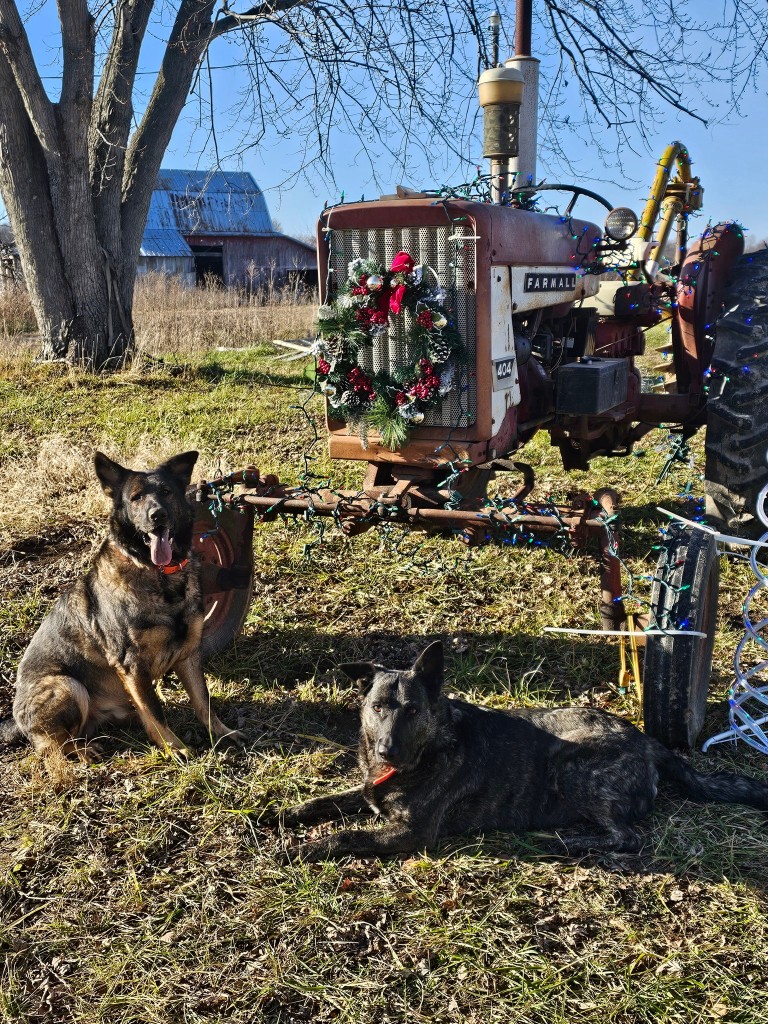
Always ask yourself if your dogs enjoy the holidays as much as you do, or would they rather just stay home in a quiet room?

While you might not be able to control how you feel about Great-Aunt Gertrude’s 2000th telling of your disastrous first date or stop your brother from turning on whatever football game there is instead of engaging in family conversation; we can help our pets cope more easily with the holidays.

Because we love our dog, we often want to show it off and let people see how wonderful that dog is. However, not all dogs are that excited about meeting all our friends and relatives.

Unlike you, your dog does not have to be in the middle of that family gathering. If your dog is not a social butterfly find him a quite place in the house to relax. One with a door that shuts and is away from most of the activity is even better. If your dog is truly stressed by visitors consider if he would be happier if you boarded him at his favorite boarding facility.

If you are hosting the family gathering, ask your family not to bring their pets, unless you know your dog already had a great relationship with those pets. Numerous dog fights happen each year when extended family members get together and everyone wants to bring their dog. Think of all the high value food that is around which can cause dog/dog conflict, not to mention the crowds of people and inadequate space for dogs to properly meet.

If your family member cannot leave their pet behind, have a game plan for where that pet will be and how it will be introduced to your pet in a relaxed manner. Make sure the visiting pet will have a quite space to be away from the action if needed.

For those of you traveling, ask yourself if your dog really needs to go with you. We often feel bad boarding our dogs, but if you have chosen the right boarding facility, chances are good your dog may be less stressed there. If your dog must go with you; again, have a plan for where that dog will be staying once it gets there and how it will meet any other dogs and family members.

One of the reasons I crate train my dogs is so when I travel, they will not be stressed if I ask them to go into their crate and hang out, even in a strange home. You do not want to put your dog in a crate for the first time when you are already doing something stressful such as traveling or having company.
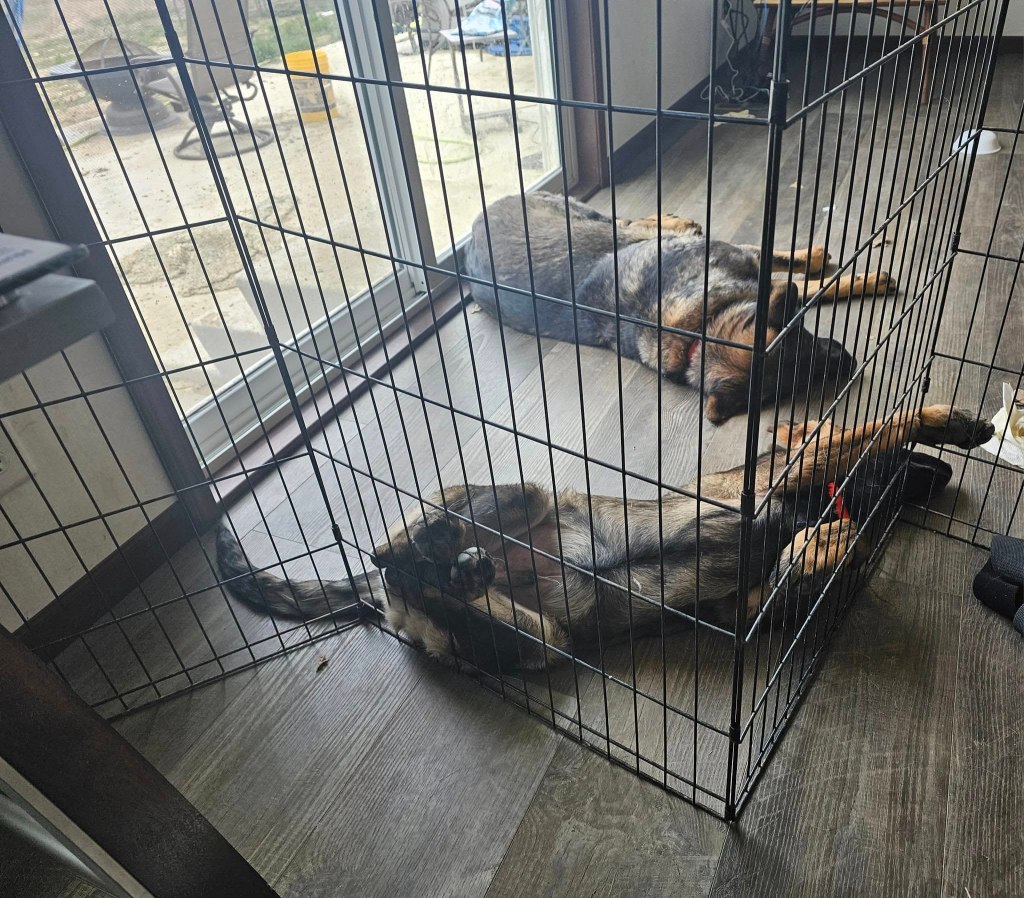
Crates and X-pens are a great way to help dogs relax and keep everyone safe and happy during the holidays. This puppy is very relaxed as all the action that could be stressful is on the other side of this X-pen

Most of the calls I get after the holidays involve a dog biting a child or biting some other family member’s dog. Even if your dog has been great with adults that doesn’t mean he will be a fan of small children and while he may like the occasional doggy friend, it doesn’t mean he will be friends with all dogs he meets.

I just got a call from a devastated pet owner whose beloved dog bit a visiting 3-year-old child. When I asked what was going on before the bite; I was told no one saw anything because both the dog and the 3-year-old were under the table while everyone was sitting down to a meal. Never, ever leave your dog alone with a child. A good rule of thumb is this: however old the child is, you should be within that many feet of the dog/child. Example: if the child is 1 years old, an adult should always be within one foot of that dog and child. If the child is 4 years old an adult should always be within 4 feet. That means ALWAYS. It means you can’t go answer the door and leave the dog and child in another room or be pre-occupied getting dinner. Many dog bites to children happen when no one is in the room with the child and dog.
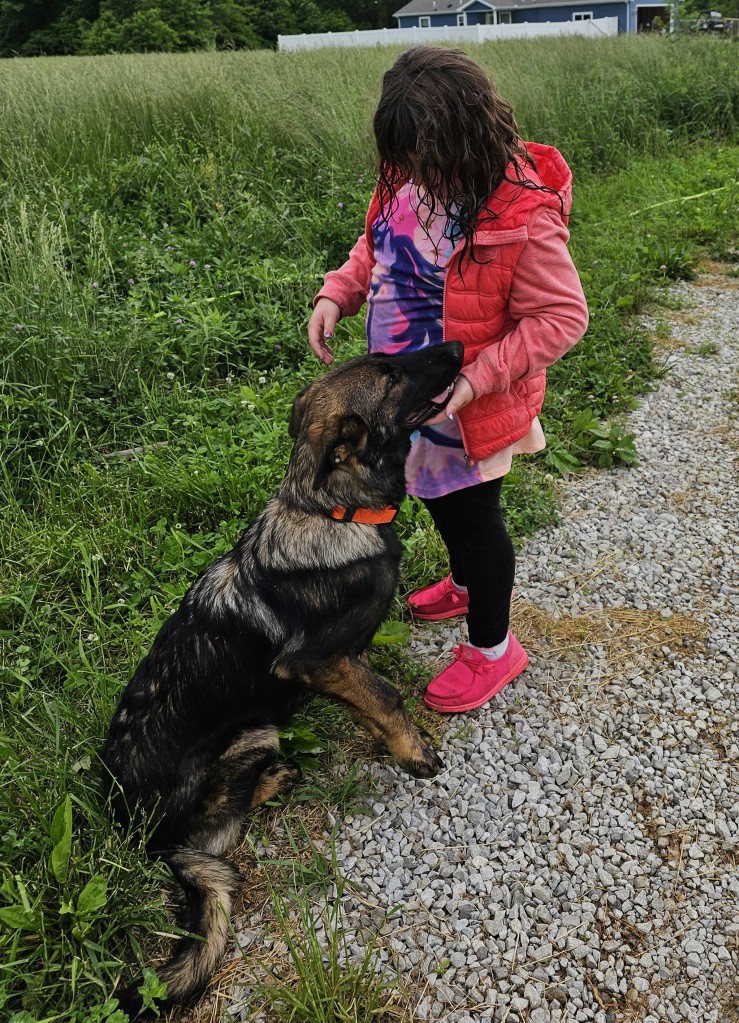
Interactions between dogs and children they do not know can sometimes lead to unfortunate encounters. Always teach children to be respectful of dogs they meet and never leave a child unattended with a dog.

Ask your guests of all ages to be respectful of your dog and her personal space. No one should ever go up to your dog and pet it. NO ONE. Your dog should get to choose whether she wants to engage with visitors. Think about what your dog looks like when she wants you to pet her. What does she do? Does she paw your leg? Bump your hand? She is letting you know she is ready for an interaction. If your dog does not use the same signals to visitors, they should ignore her. Your dog’s job is not to be petted by everyone in your home. Your dog’s job is to not bite anyone, and your job is to ensure you do not set your dog up for failure.  

Especially when children are present, keep a close eye on your dog’s body language. Is your dog constantly moving away from a 5-year-old intent on petting it? If so, that dog is politely asking for the child to stop interacting. Is the dog turning its head away when approached, licking its lips or yawning? You might consider putting the dog in a quiet room away from the action or ensure the child is old enough to understand the dog is asking for some space.

Resources are another hot-button issue when dogs are involved in the holidays. A resource is something a dog may want and which it might be unwilling to share. Think of a piece of ham dropped from the 4-year old’s plate or maybe your dog doesn’t enjoy people (or other dogs) coming near you or its favorite sleeping spot.

These resources often cause a lot of conflict between dogs and between dogs and people they don’t know well. When people are eating it is a great time to give your dog a quiet break away from the action. Encourage people not to share food with the dog, especially if there are multiple dogs in the home.

To simplify everything; just ask yourself how your dog feels about visitors. If she is a social butterfly then let her mix and mingle, but still watch for signs of stress or anxiety and give her a break if needed. If you know your dog is worried about visitors then don’t even attempt to change how she feels during the holidays, instead work with a professional trainer who has behavior modification experience and maybe your dog will be up for the holidays next year.

Oh, Those Pesky Puppies

Everyone loves puppies (and if you don’t love puppies, you probably are not reading this blog). They’re cute, they have puppy breath, they follow you everywhere you go and they depend on you for everything – at least for a month or so.

Then everything changes.

Suddenly, that cute bundle of fluff that still hasn’t learned to potty outside (and his messes are getting bigger) has decided your couch is the best thing in the world to chew on. Unless of course your favorite pair of shoes are within reach. Other favorite chewing options may include your arms, legs, clothing, kids’ hair, family cat, other dogs, garden hose, the cable to the laptop and your cellphone.

Your puppy also has  become more independent. He wants to go exploring. He wants to learn the rules and, if he can’t find any, he will be happy to make up his own. He will race through the house jumping on things, testing his strength and generally just keep growing up.

At this point, you might begin to wonder what happened to that sweet little thing you adopted. You wonder if somehow you got a “bad” puppy. Instead of causing joy, the puppy begins to cause tears and serious bouts of frustration.

The good news is, you are NOT alone and that puppy isn’t a bad puppy. Just about all puppy owners feel the same way you do. And puppies grow up. If you give them love, structure, training and socialization, they will become awesome family pets that you will be proud to call yours. The bad news is, they won’t become that awesome family pet without your help. Puppies need training and socialization.

You can’t expect your puppy to know not to chew on your shoes, bite the kids, potty outside, or bring you the paper each morning unless you train him.Taking your puppy to a puppy class is an important first step. It will help you see you’re not alone as you share your scratched up arms with other puppy owners. Your puppy will learn how to interact with other puppies and both of you will learn how to interact together as a team. Nothing strengthens the human-animal bond like a good training program.

Let’s look at some common problems:

Housebreaking: It’s all about patience and consistency.

You can’t scold your puppy for an accident that happened when you weren’t watching him. The puppy will never understand that he is being scolded for something that happened in the past, even if it is a very recent past. Ignore accidents and clean them up thoroughly with a cleaner designed for pet accidents. Take your puppy out on a regular schedule and keep his food and water on a regular schedule during the housebreaking phase. Make sure he can predict when he will be let out for the last time at night and when he will get out first thing in the morning.

Never let your puppy out of sight, even for a second. If you can’t watch him, teach the puppy to hang out in his crate. When the puppy does potty outside,  be lavish in your praise and give him a treat. Don’t just let your puppy outside and hope he goes. Go out with him and keep him on a leash until he potties. If he won’t potty, take him back inside, put him back in his crate and take him back out in 5 or 10 minutes.  Then let him off leash to romp and play. Otherwise the puppy may get so distracted at playing that he forgets to potty until he is back inside. Watch for your puppy to begin sniffing near the door or on the floor. When you see this, immediately take him outside.

For more house training tips, visit the ASPCA’s Virtual Behaviorist for some great tips.

Biting: Puppies need to find out how their teeth work and they do this by biting anything they can find, including you. Puppy teeth hurt!

One of the best ways for puppies to learn bite inhibition is for them to play with other puppies or tolerant adult dogs. The puppies and adults will tell the puppy if it bites too hard. Sometimes humans can use the same approach. Try making a high-pitched “yelp” if your puppy bites you. This works for some puppies. But a word of warning: this doesn’t work for all puppies and some puppies learn that it’s a fun game to make you yelp. Telling your puppy “no” or “no bite” doesn’t work. Remember, he doesn’t speak English. For all he knows you are telling him how much fun you are having with him.

If your puppy is biting you, get up and walk away from him, ignoring him completely. If he begins to follow you and isn’t biting, tell him what a good puppy he is and then find him an appropriate chew toy. And, make it a fun toy then praise the pup for playing with the toy. Provide the puppy with LOTS of things to chew on. Don’t just say, “Well he has lots of toys” because the toys have to be things he wants to chew on, not things you think are fun. Elk antlers and Kongs filled with treats make good chew toys. Also, don’t keep all of your puppies’ toys out all of the time. Puppies are like children and they can get bored easily so be sure to rotate them. Don’t hesitate to put your puppy in his crate if he is driving you nuts. The crate can be a fun place to relax and chew on a favorite item. Put the puppy in the crate with a treat and some toys, but never as a form of punishment. This should be more of a place for him to chill out while you catch up on work, exercise or watch TV.

If your puppy is biting at you when you or your kids walk through the house, take a toy and put it on the end of a rope or leash and drag that beside you. The puppy will decide that the toy is much more fun than your leg and start to chase what you’re dragging. This can also be a fun and safe way for your children to interact with the puppy.

Above all, keep your cool. Yelling at the puppy won’t help. Don’t close his mouth if he is biting you, push him, spank him, spray him with water, or do anything else that might harm or scare the puppy. You want him to love you, not be afraid of you.

My number one tip: Ignore bad behavior, reward good behavior. If the puppy is just on your last nerve, put him in his crate with a Kong and then sit down with your favorite beverage and relax.